
I Will Exalt You: Julia’s Story of Worship, Forgiveness, and Faith in the Unknown
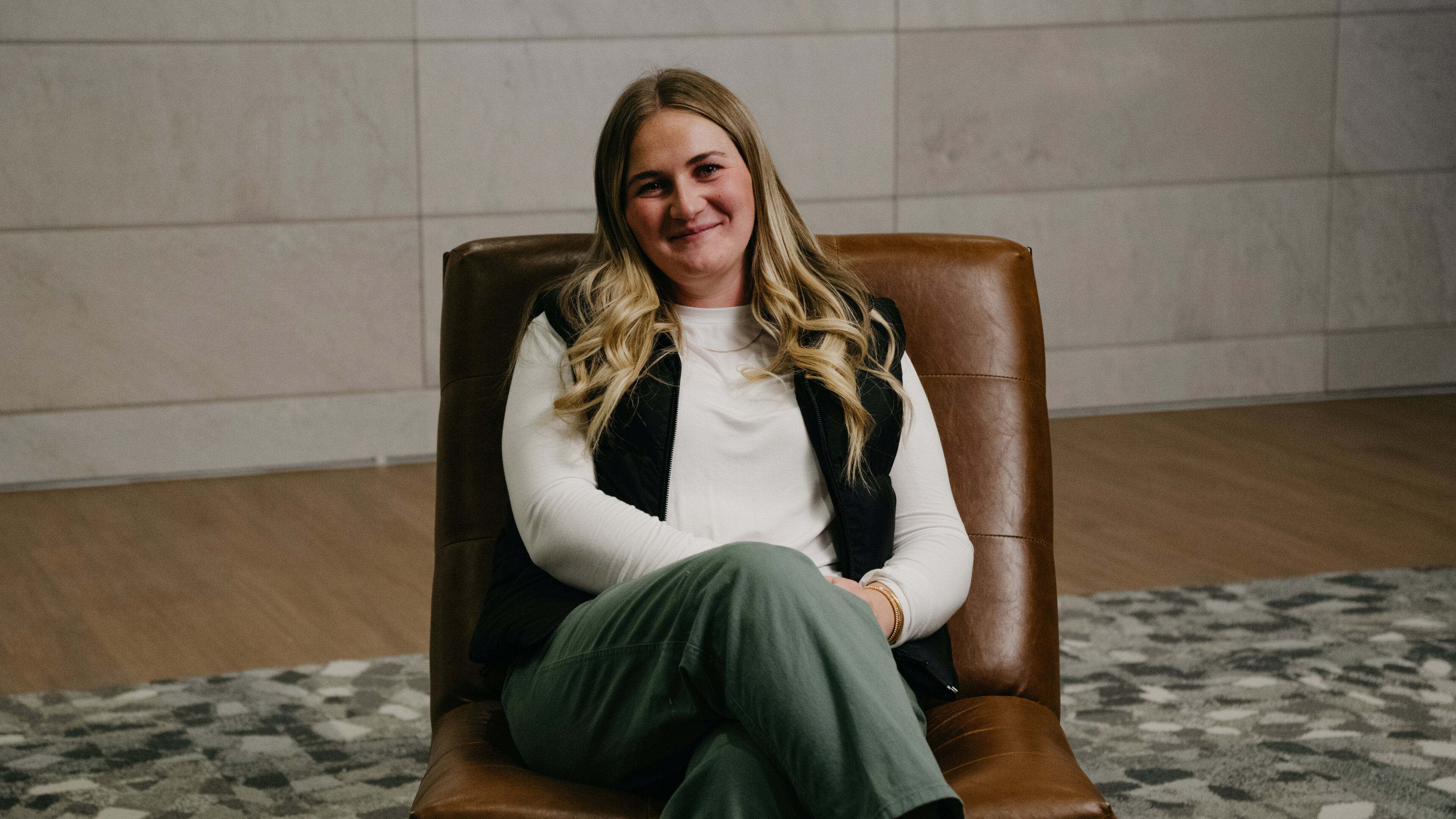
My name is Julia Todd. I was born and raised in Lexington, Kentucky, and graduated from the University of Kentucky in December 2023 with a degree in psychology. Shortly afterward, I joined the staff of UK Christian Student Fellowship. I have been there for just over a year now, and I truly cannot imagine my life looking any different.
Faith has always been part of my story. I was raised by parents who deeply love the Lord, attended a Christian school through sixth grade, and grew up surrounded by generations of faithfulness. My grandfather is a pastor, my parents have served in children’s ministry, and my mom was part of the worship team when I was young.
Jesus was never unfamiliar to me. I really have not known a day without Him.
Faith was also woven into the ordinary rhythms of our family. Even our family gatherings were centered around Christ. Every New Year’s, one side of my family would gather together, pull out a hymnal, and spend hours playing and singing. Nearly everyone played an instrument.
Music was not simply something we enjoyed. It was part of who we were.
When Music Became More Than Music
Both sides of my family are musical. My parents even sang to one another during their wedding ceremony. I began taking piano lessons from my grandmother before eventually studying with a teacher through the end of high school. I experimented with a few other instruments, but nothing stayed with me like the piano did.
As I got older, music became more than a family tradition. It became one of the primary ways the Lord carried me through difficult seasons.
My fifth-grade year was especially hard. Both my dad and my older sister were hospitalized for different mental health struggles. I was young and did not fully understand everything happening around me, but I remember waking up each morning and playing a particular worship song on my iPod.
The song contained the words, “I will lift my eyes.”
There was something powerful about singing that declaration while everything around me felt confusing and unstable. It took my attention away from what was happening in my world and placed it back on Jesus.
That truth was life-changing for fifth-grade Julia: even when I could not understand what was happening, I could still choose where to place my eyes.
Music has continued to do that for me again and again.
Making My Faith My Own
After attending a Christian school for most of my childhood, I transferred to public school in seventh grade. It felt as though the Christian rug had been pulled out from underneath me.
Suddenly, not everyone went to church on Sunday. Not everyone believed what I believed. I was being introduced to experiences and perspectives that had not been part of my world before.
Still, that heart of worship remained with me throughout middle school. Then, during high school, I began to understand that music was not merely something I had been given for myself. It was a gift I could use to serve the Church and the people around me.
I became involved with a large Bible study made up of students from schools across Lexington. I began leading worship there and eventually started leading for my youth group on Wednesday nights.
As a child, I never looked at the worship pastor and thought, “That is what I am going to do someday.” It happened gradually. Little by little, the Lord continued asking me to use the gift He had given me for Him.
Music shifted from something I passively experienced into an active expression of my faith.
Now, whenever I lead worship, I feel as though I meet with the Lord. Worship continues to draw me closer to Him.
Worship as the Overflow of Prayer
During my freshman year of college, I began attending Arise, a network of house churches throughout Lexington. The churches gather in individual homes most Sundays and come together for a larger service once a month.
On my first Sunday in someone’s living room, they asked whether anyone knew how to play music.
I reluctantly said, “I guess I do.”
Another woman offered to sing with me, and the two of us began leading worship together every Sunday. Once a week, I would carry my very unportable keyboard out of my dorm room and take it to her house so we could practice.
She taught me something I did not even know I needed to learn.
I would arrive ready to play, but she would stop and say, “No, let’s pray first.”
We would sometimes spend 30 or 45 minutes praying before I ever touched the piano. Growing up with music lessons and rehearsals, I had learned how to arrive, prepare, and get the job done. She showed me that worship was not simply about preparation or musical excellence.
Worship is the overflow of an inner life of prayer.
Eventually, I moved to another house church within the Arise network. Without that woman leading me into prayer each week, I quickly noticed something was missing. I no longer sensed the Spirit leading me in the same way.
I realized I had learned to depend on her prayer life rather than developing my own.
The Lord used that season to teach me how to seek Him for myself. Today, I continue leading worship at Arise and help lead the worship team at CSF’s Thursday night gathering, Synergy. There is something incredibly special about being in a room full of college students worshiping together.
Learning What Forgiveness Really Means
Although I grew up surrounded by faith, my life has not been all sunshine and rainbows.
The difficulties that began during fifth grade became part of a much longer mental health journey for my family. My mom and I became extremely close because we often leaned on one another while my dad or sister was struggling.
Over time, I became deeply resentful toward my older sister.
We are only 19 months apart, but our relationship was filled with conflict. We fought constantly, sometimes physically. Eventually, she moved out, and I largely removed her from my life.
When I moved into my college dorm in 2020, I thought I had finally escaped the chaos. But on the very night I moved in, my mom called and asked me to come home because my sister was having another crisis.
It felt as though I had been pulled straight back into everything I had spent years trying to leave.
During my first semester, I was consumed by anger. I wrote in my journal that I did not even want to call her my sister. When the university closed its dorms for an extended Christmas break during the pandemic, we ended up living under the same roof again.
My anger became so intense that my mom eventually told me, “Julia, you cannot talk about my other daughter this way. The things you are saying about her are hurting me.”
I began attending counseling virtually. During one session, my counselor asked me a question that changed everything:
“What are you going to do if your sister never tells you she is sorry?”
I had built my entire understanding of forgiveness around the expectation that she would eventually apologize for everything she had done. My counselor helped me understand that forgiveness is not merely a conversation in which one person says, “I’m sorry,” and the other responds, “I forgive you.”
Forgiveness is allowing the Lord to soften the hard places in your heart toward another person.
I returned to school knowing that something had to change. I told the Lord, “If she is never going to apologize, then You have work to do in me, because I cannot continue living with this much anger.”
For months, I prayed on the floor of my dorm room. At the same time, I was interning with CSF and was surrounded by a strong Christian community.
Slowly but surely, the Lord softened my heart.
Over the following year, my sister began calling me unexpectedly. Sometimes she simply wanted to talk. Other times she would tell me she was nearby and ask whether she could visit.
Little by little, our relationship was rebuilt.
Today, my sister and I are closer than I ever imagined we could be. She does not currently have a relationship with the Lord, but the restoration of our relationship means I now get to be a small part of her life as I pray for her to know Jesus again.
I could not do that if I had refused to forgive her.
Faith When the Story Is Still Unfinished
There is another story I am still living through.
During my junior year of college, I traveled to Israel with CSF. It was an incredible experience, and it was during that trip that I decided to apply for a staff position with the ministry.
When I returned home, my parents picked me up from the airport. My mom was driving, which immediately seemed strange because my dad loves to drive. He barely spoke during the entire trip home.
Later that evening, my mom told me they were taking him to the emergency room. Doctors discovered that he had appendicitis, but the scan also revealed tumors on both of his kidneys.
He was eventually diagnosed with kidney cancer.
Everything seemed to change overnight.
One kidney was removed, and doctors later began immunotherapy to treat the cancer in the other. His first treatment went well, but during the second treatment, while I was sitting beside him, he had a severe reaction. He lost consciousness and began shaking uncontrollably.
That moment began several weeks of hospital visits, uncertainty, and unanswered questions. At the same time, I was trying to complete my final semester of college and write an undergraduate thesis. I would bring my backpack to the hospital and attempt to work beside my dad’s bed, but I rarely accomplished much.
I often left the hospital crying.
Once again, music became the place where I brought my pain to the Lord. This time, the song was “I Will Exalt You.”
There was something powerful about declaring that I would exalt God in the middle of my pain, confusion, and fear. I did not always see Him in the hospital room. I did not understand what He was doing.
But He was still the God of the universe.
He was still worthy of my trust.
Eventually, my dad’s second kidney also had to be removed, and he began dialysis five days a week. After remaining cancer-free for a year, we hoped he would qualify for a kidney transplant. I even began the process of determining whether I could be his donor.
Then we learned that the cancer had returned.
It felt as though our family had gone straight back to square one.
He is now taking a daily medication to treat the cancer throughout his body and has responded relatively well. Still, there are moments when I ask, “Lord, where are You?”
In those moments, I return to the same declaration:
“I will exalt You.”
Even when I do not feel it. Even when I am angry. Even when I do not understand.
I love Him, and I trust Him.
Taking It One Day at a Time
What we proclaim with our mouths has power.
You may be angry with God because of what is happening in your life. Your emotions may not have caught up with what you know to be true. But there is power in reminding yourself of who He is and what He has already done.
When you remember His faithfulness in Scripture, in your community, and throughout your own story, that faithfulness begins to rise again.
I have also learned to take life one day at a time. I naturally think about the future, but this is one situation where I cannot allow myself to live too far ahead.
Today, my dad is alive.
Today, he is more present and emotionally healthy than I have ever known him to be. In many ways, he is more fully my dad now than he was throughout much of my childhood.
I thank the Lord for that.
I continue asking God to heal him, but I also recognize that healing is mysterious. I believe it is the Lord’s desire to heal, but I do not know whether that healing will happen on this side of heaven.
So, I return to the words of Jesus in Matthew 6:34:
“Do not worry about tomorrow, for tomorrow will worry about itself.”
Today, I will trust Him.
Today, I will remember His faithfulness.
And today, whatever happens, I will exalt Him.