
When God Feels Silent: Keith’s Story of Calling, Waiting, and Trusting His Timing
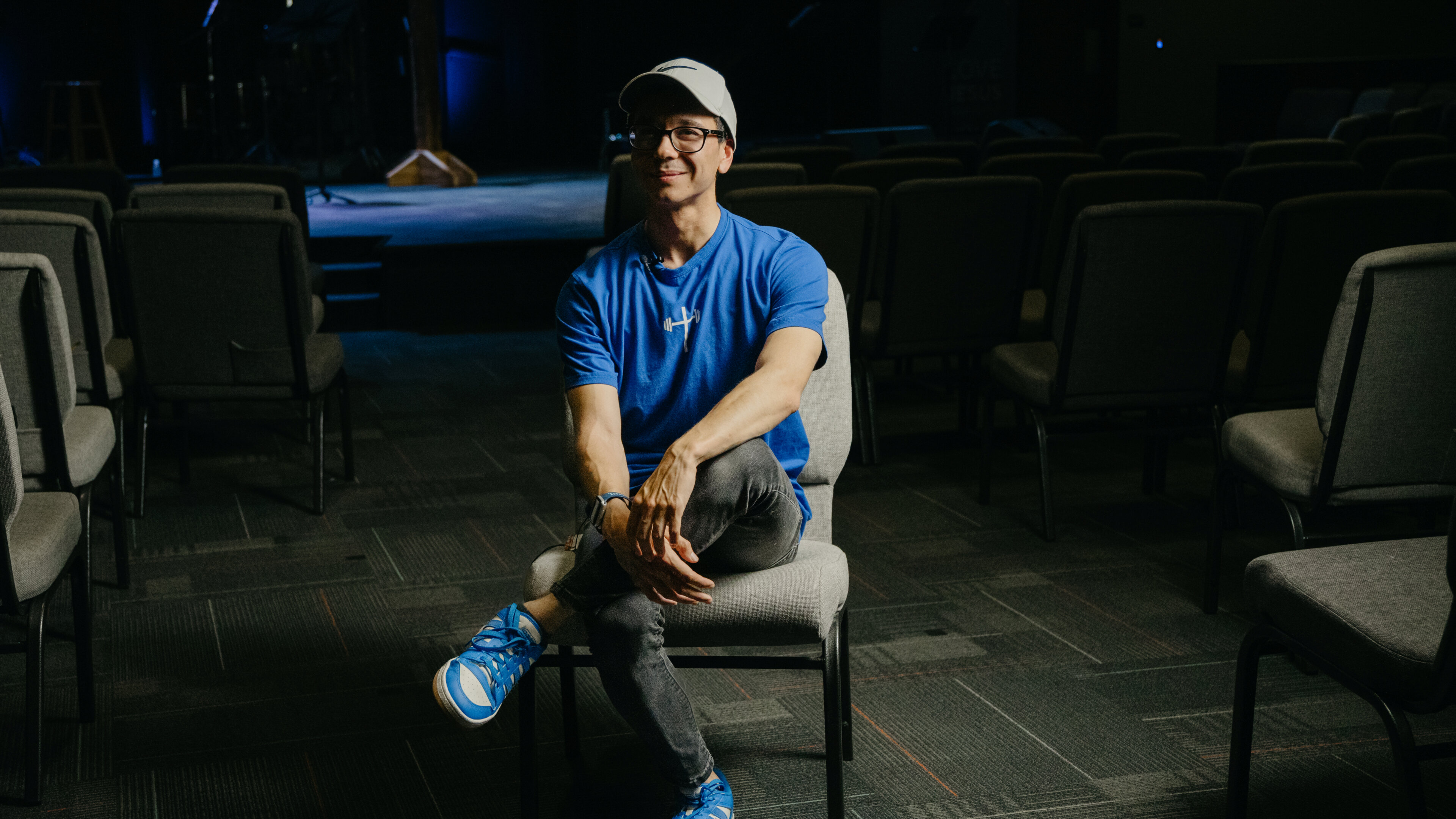
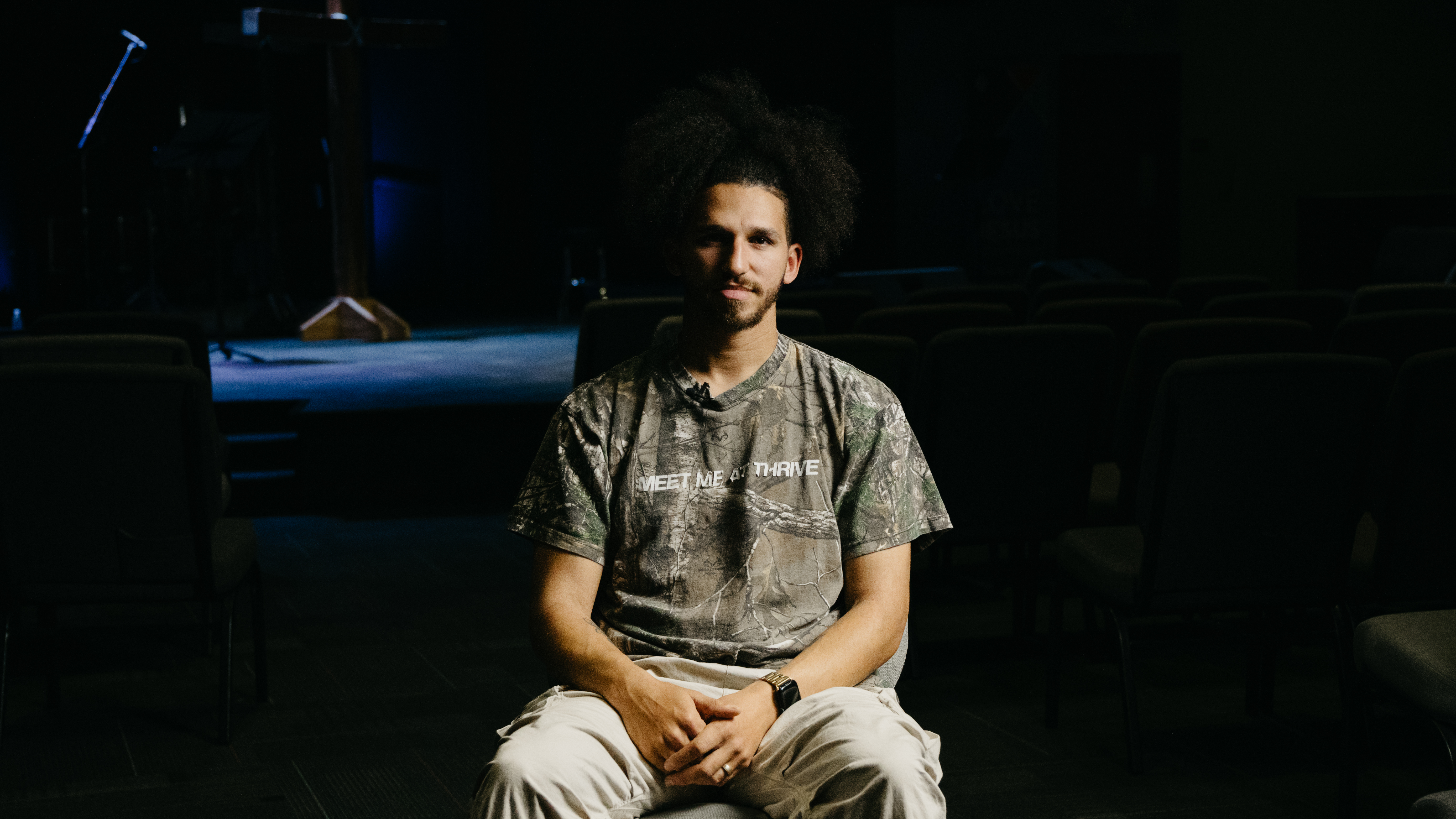
My name is Keith Wilson Jr. I am originally from Lake Bluff, Illinois, but I moved to Kentucky for college in 2015. It was here that I met my wife, built a life, and eventually stepped into my current role as a worship associate at Immanuel Baptist Church.
Music has been part of my story for as long as I can remember.
My mom loves to tell a story from when I was very young. She was driving me home from daycare and thought I had fallen asleep because I had been completely quiet in the back seat. Then Lenny Kravitz’s “Fly Away” came on the radio.
When the chorus reached the one part I knew, I suddenly screamed it as loudly as I could.
My mom nearly crashed the car because she thought something had happened to me. When she tried to sing along, I looked at her and said, “No. I’m singing.”
Apparently, I knew from an early age that music was my thing.
Learning to Keep Going
I started singing in choir as soon as my school allowed it. My first real solo came during an old-fashioned Christmas musical at my church.
I practiced the song and knew it well. During the performance, I made it through the first verse and chorus without a problem. Then the second verse began, and I completely forgot the words.
This was before confidence monitors were common, so everything had to be memorized. Under the lights, looking out at everyone in the audience, I froze.
Our director was sitting near the front. She silently mouthed the next few words to me, and I picked the song back up and continued as though nothing had happened.
Internally, I was devastated. I kept replaying the mistake and criticizing myself for it. But after the performance, no one came up and focused on the fact that I had forgotten the lyrics.
Instead, they told me how impressed they were that I had recovered and kept going.
That response stayed with me.
It would have been easy for that first solo to become a traumatic moment that pushed me away from performing. I could have decided that singing in the background was fine but being out front simply was not for me.
Instead, I learned that making a mistake did not mean the moment was over.
Sometimes, the most important thing you can do is keep going.
Music Became My Direction
Throughout middle and high school, I stayed involved in nearly every form of music I could find.
I sang in choir, played euphonium and trombone in band, performed in theater productions, and participated in all four of my high school’s musicals. I also began playing bass for my church’s youth worship band.
Music was not just an activity I enjoyed. It was the clearest direction I had for my future.
My high school choir director had a major influence on my life. He was someone I respected deeply, and I wanted to have the same kind of impact on other students that he had on me.
Because of that, I entered the University of Kentucky intending to study music education and become a high school choir director.
I felt so certain of that plan that I had largely stopped investing myself in other subjects during high school. Math, science, history, and English did not seem especially important because I already knew what I wanted to do.
I did enough to get into college and even received a scholarship based on my audition.
But once I arrived, I discovered that being passionate about music did not automatically make me a disciplined student.
When the Original Plan Fell Apart
College music courses required far more than the ability to sing or play an instrument. There was theory, history, memorization, practice, and a significant workload outside the classroom.
During my freshman year, I struggled but managed to keep my scholarship and pass my classes. By sophomore year, however, the gaps in my understanding began catching up with me.
Music theory builds on itself. To succeed in the next course, you need to thoroughly understand the material from the previous one.
I had learned enough to pass tests, but I had not truly absorbed the information.
I began falling behind. I dropped some classes and failed others that I would need to retake. By my junior year, I was living off campus, working to pay rent, attending school, and participating in several choirs and music ensembles.
A great deal of my time was spent in rehearsals, concerts, and trips that did not necessarily count toward my official credit hours.
I quickly became overwhelmed.
Eventually, I dropped enough courses that I lost my scholarship and became a part-time student.
At the same time, I knew that the woman I was dating would eventually become my wife. I wanted to propose, but I also knew I needed to become financially stable and capable of providing for our future.
I decided to step away from school, find full-time work, and save money.
I always intended to return.
I never did.
For a long time, I had believed that becoming a choir director was my calling. When that plan ended, I was left without the future I thought I had already figured out.
But the Lord was not finished using music in my life.
Finding a Church Through Music
My first experience at Immanuel Baptist Church came during my freshman year of college. A friend invited me to an Easter service.
At the time, I did not have a car, so I attended whichever church I could get a ride to. I was heavily involved with Christian Student Fellowship, but I had not truly connected with a local church.
When I attended Immanuel that Easter, I was blown away.
The service included a contemporary worship band, a choir, and an orchestra. Coming from a musical background, I had never experienced a church that brought all of those elements together.
It made a lasting impression on me.
That summer, I worked as a camp counselor at Lexington Christian Academy, which was operating from Immanuel’s campus. One day, I ran into Christian Novicki, who was the worship associate at the church.
We knew of each other but did not really know one another. He had seen me lead worship during a campus event at UK. During our conversation, he told me that if I was not already serving somewhere, he would love for me to audition for Immanuel’s worship team.
I immediately accepted the opportunity.
I began singing with the team, although once the worship pastor learned that I played bass, I spent much of the following year primarily serving as a bassist.
I simply wanted to be involved.
Discovering the Call to Worship Ministry
Around 2016 or 2017, Immanuel acquired its Armstrong Mill campus. At the time, the campus did not have a permanent worship leader, so volunteers were regularly sent to lead.
I helped a few times and saw the need for someone to provide consistency.
I reached out to the worship pastor and told him that I loved leading worship. I did not know whether I was called to become a worship leader, but I wanted to help however I could.
I began serving in what was essentially a contract or internship role. I would lead rehearsals and worship on Sundays without being a full-time member of the church staff.
Eventually, the church hired Jared as the permanent worship leader at Armstrong Mill. I remained there, serving alongside him and learning as much as I could.
Jared became one of the greatest influences on my development as a worship leader. When I first began, I was still relatively new to guitar. I knew basic chords and how to use a capo, but not much more.
I also knew very little about church production, technology, service planning, or the many details required to lead worship effectively.
Over the next couple of years, I learned those things from Jared.
During that season, I was also working at a bank. It was a stable job with reliable income and benefits. There were opportunities for advancement, but I was not passionate about the work.
Somewhere between serving at the church and working at the bank, I realized that worship ministry was not simply something I enjoyed.
It was what God was calling me to do.
Called, but With Nowhere to Go
Knowing that I was called to worship ministry did not immediately create a job for me.
That was one of the most difficult seasons of my life.
I did not merely feel called to become a worship leader somewhere. I felt specifically called to Immanuel Baptist Church. I was not interested in applying at every large church in the area or searching for any available worship position.
I believed this was where God wanted me.
But there was no opening.
It is a strange place to be when God’s call feels perfectly clear, yet there is no visible opportunity to walk into it.
I felt equipped. I had spent years developing musically, learning how to lead services, growing in technical knowledge, and gaining ministry experience.
I felt ready.
But no doors were opening.
I had to decide whether I trusted God enough to remain where He had placed me, even when I could not see how the story would move forward.
It would have been easy to give up and fully embrace a career in banking. It also would have been easy to begin applying at other churches and force an opportunity to happen.
Instead, I waited.
It was not easy. At times, it was incredibly frustrating.
But looking back now, I can see that the waiting was worth it.
When the Door Finally Opened
Eventually, Jared began taking on additional ministry responsibilities and stepped away from leading worship for the student ministry.
The church approached me and asked whether I would take over that role.
I began leading students during the spring of 2020.
Then, in September 2021, I decided to have an honest conversation with the church’s leadership. I told them that I loved Immanuel, believed I was called to ministry, and wanted to work there if an opportunity ever became available.
There was no official position waiting for me at the time. Instead, the church created a residency program for me and another person who was interested in ministry.
We met with a pastor who led us through books on theology, leadership, and development while we worked part-time at the church. The program allowed us to experience ministry more fully and determine whether we were truly called to vocational ministry or simply wanted to serve as high-capacity volunteers.
Several months into that residency, the church’s staffing structure changed. Jared moved into a full-time role at Armstrong Mill, leaving the worship associate position open at the Tates Creek campus.
The church offered me the position.
I immediately accepted.
I have been there ever since.
The opportunity I had waited years for finally arrived, but it did not happen according to my schedule. It happened after a long season of serving, learning, developing, and trusting God without knowing exactly what He was doing.
Ministry Is More Than the Stage
Serving in ministry has been deeply rewarding, but it has also brought challenges I did not fully understand beforehand.
Church work does not always fit into a clean schedule. Fridays and Saturdays may technically be my weekend, but Sunday is always coming.
The first day of our workweek is also the day everything has been building toward. There are times when ministry requires showing up outside normal office hours because the work cannot simply be postponed.
Ministry also involves working closely with imperfect people.
Everyone may share the goal of reaching people for Christ, but we still have different personalities, opinions, preferences, and ideas about how things should be done.
At a multigenerational church, those differences can become especially clear.
Some people see where the Church is going and want to embrace more contemporary methods while still honoring traditional elements. Others look at a church with more than a century of history and believe that changing long-standing practices is unnecessary.
Learning how to lead through change without dismissing the people who came before you is difficult.
I am still learning how to do it well.
Feeling Called Into Another Season
In some ways, I now find myself in another waiting season.
I increasingly feel called toward college students and young adults. At the same time, I feel ready for greater responsibility in worship ministry.
I have developed my skills, built experience, and grown as a leader. Yet I am not currently the lead worship pastor, and I do not know exactly what the next version of my role will look like.
I am helping with young adult and college ministry wherever possible, but I also have to learn when to say no.
Sunday remains a major priority. If taking on additional events, worship nights, or ministry responsibilities prevents me from preparing well for Sunday, I have to recognize my limits.
That tension is difficult because I genuinely feel drawn toward the next generation.
Recently, I attended Passion with a group of college students from our church. In previous years, my primary purpose had been to observe the music, production, lighting, and service structure.
This time, I helped drive one of the vans.
That simple responsibility gave me hours of conversation with college students. I got to know them personally and began recognizing the influence God had given me with that age group.
It is one thing for someone to tell you that you have influence.
It is another thing to witness people listening, responding, and trusting you.
That influence is something I want to steward carefully.
A Worship Leader Is Still a Pastor
One of the most important things people overlook about worship pastors is the second part of the title.
A worship pastor is still a pastor.
The role is not limited to choosing songs, running rehearsals, or standing onstage.
Every Wednesday night, rehearsal creates something similar to a built-in small group. Of course, we want to use everyone’s time efficiently, but the moments before and after rehearsal provide opportunities for conversations, relationships, encouragement, and discipleship.
My high school choir director modeled that for me long before I knew I would enter ministry.
He did not always invest in us through formal leadership lessons. Often, he simply spent time with us. He was still our teacher, and we respected him, but he also became someone we considered a friend.
That is the kind of leader I want to be for my team.
I do not want people to believe I only value them because they can sing or play an instrument. I want them to know that I care about them as people.
Relationships strengthen my ability to disciple them, but they also strengthen my leadership. People are more willing to trust and follow someone when they know that person genuinely cares about their lives.
My choir director taught me how to pastor people before I ever knew I would become a pastor.
What to Remember While You Wait
Waiting is hard—especially when you believe you have heard clearly from God and then He seems to become silent.
But silence does not mean He has disappeared.
Often, it means He is working behind the scenes.
Looking back, I am grateful that God did not give me a complete timeline. Had He told me exactly when I would receive a ministry position, I probably would have placed my life on cruise control.
I had done that before.
Once I decided in high school that I would become a choir director, I stopped paying attention to subjects I thought would not matter. I knew where I believed I was going, so I neglected parts of the journey.
We can do the same thing spiritually.
If God revealed exactly when every promise would be fulfilled, we might stop growing. We might stop seeking Him. We might ignore the work He wants to do in us during the waiting.
God’s timing is perfect, even when it is frustrating.
The waiting may not be a test in the way we often imagine it. It may simply be the place where He shapes our trust and prepares us to carry what we have asked Him to give us.
Continue developing your relationship with Him, even when you are angry.
There were seasons when I was mad at God, but I continued showing up. I attended church. I stayed connected to small groups. I spent time with Him, and I kept praying.
Prayer is powerful.
God answers prayer, but He does not always answer in the way we expect or according to the timeline we would choose.
When God feels silent, keep showing up.
Keep serving.
Keep developing.
Keep praying.
He has not disappeared.
He may simply be preparing both you and the opportunity for the moment when His perfect timing brings them together.