
Failure Is Not Final: Andrew’s Story of Surrender, Community, and Finding Identity in Christ
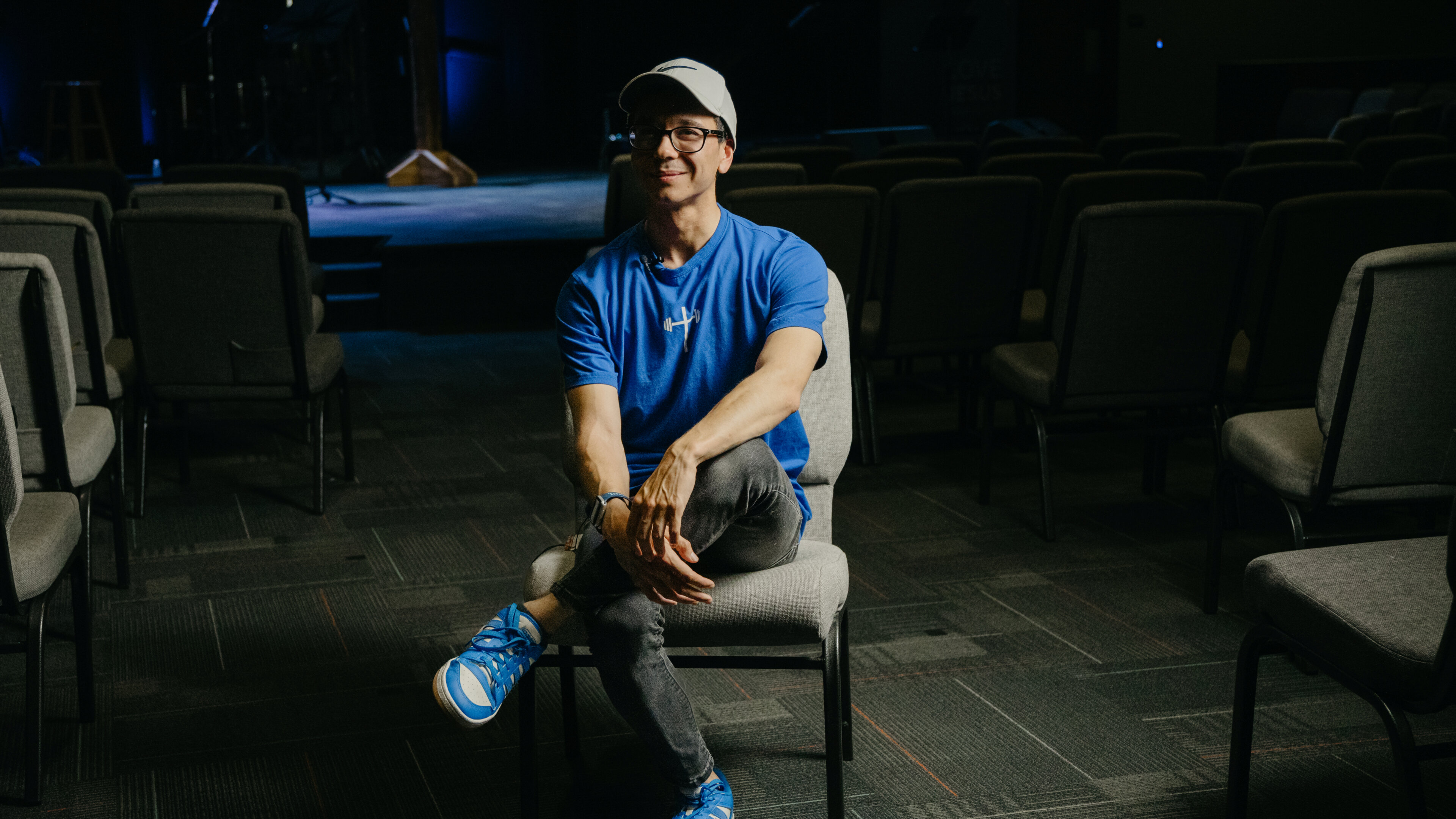
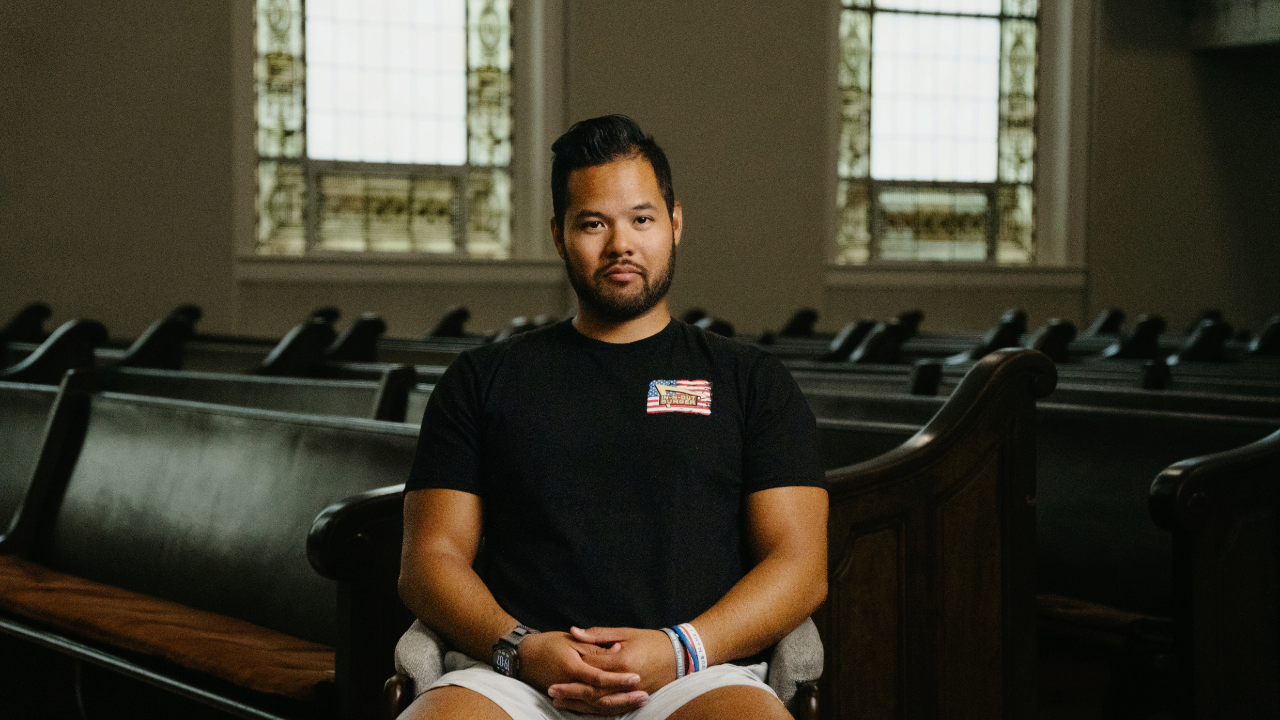
My name is Andrew Patag. I was born and raised in Los Angeles, California, and recently graduated from the University of Kentucky College of Pharmacy.
I moved to Kentucky in the fall of 2019 after completing my undergraduate degree at UCLA. I have been walking with Jesus since I was 10 years old, but much of my journey has involved learning what following Him truly means.
For years, I believed life was supposed to move in a straight line.
Work hard. Trust God. Make the right decisions. Find success.
But my life has looked nothing like that.
Instead, God has used failed classes, broken relationships, unexpected transitions, depression, unfamiliar communities, and unanswered questions to tear down the false foundations I built my identity upon.
Through it all, He has shown me that He is greater than my failures and far more capable of directing my life than I am.
Growing Up With Faith
My parents wanted my siblings and me to receive a Christian education, so I was homeschooled through ninth grade.
The public education system in Los Angeles did not necessarily reinforce the values they wanted to instill in us, so they made the decision to teach us at home.
My parents taught me to love the Lord, work hard, and respect others. I am incredibly grateful for the foundation they gave me.
When it was time for college, I had opportunities to attend private Christian schools, but I chose UCLA.
One of the reasons was that I wanted to discover whether I would actually live out my faith when I was no longer surrounded by people who automatically agreed with me.
At a Christian school, it might have been easy to blend in with people who identified as Christians but were not truly pursuing Jesus.
UCLA was different.
If you said you loved Jesus, you had to decide whether you were actually going to live like it.
There were opportunities everywhere to walk away from the faith. Most people would not have noticed or cared if I had.
Faith felt almost like a binary decision.
You were either following Jesus or you were not.
There was not much room to comfortably sit on the fence.
Learning That Truth and Grace Belong Together
I was blessed to find Christian community almost immediately at UCLA.
I became involved with Cru, formerly known as Campus Crusade for Christ, and Athletes in Action. I met people who were genuinely pursuing Jesus and wanted to help one another do the same.
That community began challenging the version of Christianity I had carried into college.
I grew up Southern Baptist in Los Angeles, which is a fairly unusual combination. I received a strong understanding of truth, and I am thankful for that.
But I did not fully understand grace.
I knew a great deal about what was right and wrong. I knew how Christians were supposed to behave.
I did not understand what it meant to receive God’s grace, live in freedom, or recognize that grace and truth must exist together.
I also carried a subtle sense of pride.
I was not doing many of the things Christians often identify as obviously sinful. I was not breaking the law, using drugs, sleeping around, or regularly getting drunk.
Because of that, I assumed I was doing well spiritually.
But avoiding certain behaviors is not the same as pursuing God.
I was not allowing Him into the areas of my life that needed transformation because I had convinced myself that I was already good.
That pride concealed deep insecurity.
Building My Identity on Achievement
I defined myself through athletic and academic success.
Getting into UCLA was difficult, both academically and athletically. I was grateful for the opportunities I received, but over time, those accomplishments became more than gifts.
They became my identity.
I knew how to introduce myself through what I had achieved.
I attended UCLA.
I played volleyball.
I performed well academically.
Those things gave me value—or at least I believed they did.
God began revealing that I had rooted my identity in nearly everything except Jesus, despite regularly identifying myself as a Christian.
He had to strip away the external things I depended upon so I could discover who I was when they were gone.
That process was not quick or comfortable.
In many ways, it is still happening.
When Life Was No Longer Linear
My parents modeled hard work and faithfulness, but they did not often talk about their failures or shortcomings.
I heard stories about overcoming adversity and finding success, especially from my dad.
He moved to the United States from the Philippines when he was 12 years old without knowing English. People told him he would never amount to anything, and he spent his life proving them wrong.
His story taught me resilience.
But the version I understood was simple:
Work hard, trust God, and you will eventually get the result you want.
That mindset shaped the way I interpreted everything.
If I studied hard, I would receive the right grade.
If I trained hard, I would find athletic success.
If I trusted God and made good choices, life would keep moving upward.
Failure did not fit within that framework.
During my sophomore year of high school, I received a B in AP Chemistry. That felt like a disaster.
Rather than learning how to process disappointment, I looked for a direct explanation. I had been distracted by a relationship, so I had not achieved the outcome I wanted.
Cause and effect.
Work harder next time.
Fix the problem and return to the upward path.
But eventually, life gave me situations that could not be solved so simply.
The Pharmacy School Door That Closed
During my senior year at UCLA, I experienced several major losses at once.
I went through a painful breakup.
My grandfather passed away.
A person who had discipled me was unexpectedly removed from my life.
I began struggling academically and failed several classes.
I was depressed and did not know how to respond to everything happening around me.
Near the deadline, I decided to apply to a pharmacy school in Massachusetts. Pharmacy programs can accept students before they have completed a bachelor’s degree, so I viewed it as a possible escape.
I applied on the final day.
It felt like a long shot, but the school accepted me and offered me a scholarship.
I thought I had found my way out.
I could leave Los Angeles, escape the pain, and begin a new life somewhere else.
There was only one problem.
I needed to complete six prerequisite classes before beginning the program in August.
I developed several plans. I considered online courses, community college classes, and examinations that could provide the required credits.
Every one of those plans fell apart.
The door completely closed.
I could not understand what God was doing.
I thought Massachusetts was the next step. Instead, I had to return to UCLA for a fifth year.
At the time, it felt like another delay and another failure.
Looking back, I can see God’s hand in it.
The Year I Was Supposed to Avoid
During that fifth year, I finally learned how to build genuine community.
The men I met during that season remain some of my closest friends today. We now live in different places across the country, but those relationships have endured.
Had the original pharmacy school plan worked, I would never have experienced that year with them.
I was also able to apply to more pharmacy programs.
One of them was the University of Kentucky College of Pharmacy, which was among the highest-ranked pharmacy schools in the country.
Had I known how competitive it was, I probably would not have applied. My undergraduate grades did not make me feel like an obvious candidate.
But I was accepted.
God used a closed door in Massachusetts to redirect me toward Kentucky.
Had the first plan worked, countless parts of my current life would never have happened.
I would not have moved to Lexington.
I would not have met the people who now make up my community.
I would not have served in the ministries that have shaped me.
I would not be telling this story today.
Tearing Down the Pillars
Since approximately 2016, God has been breaking down the strongholds and false foundations I built.
The main pillars were athletics, academics, relationships, and community.
I also carried a deep desire for marriage and believed that part of my life needed to unfold according to a particular timeline.
Those things are not inherently bad.
Athletics can develop discipline.
Education can prepare you to serve others.
Relationships and community are gifts from God.
Marriage is a beautiful desire.
The problem was that I looked to those things to tell me who I was.
God began showing me that none of them were strong enough to carry the weight of my identity.
When I moved to Kentucky, I was living away from my parents for the first time. I love them and am grateful for them, but our relationship also included a significant amount of control and emotional baggage.
The distance created space for God to work.
For the first time, I was in a state I had never visited, surrounded by people I did not know.
It was just God and me.
He began asking whether I would finally allow Him to break the patterns and strongholds I had not even realized were controlling me.
Living With One Foot in Kentucky
When I moved to Lexington, I was still dating a woman I had met at UCLA.
I played volleyball, she was on the rowing team, and we met through Athletes in Action. People saw us as a Christian athletic power couple and joked that we would someday have Division I athletes for children.
The reality was far less healthy.
Our relationship became toxic on both sides, but we remained together for approximately three and a half years.
During my first two years in Kentucky, I always had one foot here and the other in California.
I assumed I would complete pharmacy school and move back. Either I would return to her, she would move to Kentucky, or we would relocate somewhere else together.
Because I viewed Kentucky as temporary, I did not fully invest in the people around me.
I began attending Southland almost immediately, but my involvement was minimal. I arrived, attended the service, and left.
I also expected to find community primarily through my pharmacy school class.
There were several great people in the program, but I never fully gave them a chance because I was still holding tightly to the community I had at UCLA.
Whenever possible, I flew back to California.
I never completely checked into my life in Kentucky.
Then the relationship ended unexpectedly.
Suddenly, the future I had built around that relationship disappeared—and I realized I had been living in Lexington for years without truly allowing it to become home.
Putting God in a Community Box
The end of that relationship exposed another idol in my life.
I had very specific expectations about community.
I believed meaningful friendship in Kentucky needed to look exactly like the community I had experienced at UCLA.
It needed to involve people my age, in the same stage of life, with the same kind of Christian background and shared experiences.
Without realizing it, I had placed God inside a box.
I was essentially telling Him, “You can provide community, but only in these specific ways.”
He began proving me wrong.
One of the main ways He did that was through volleyball.
Finding Community on the Sidelines
Shortly after the COVID-19 pandemic disrupted nearly every normal rhythm of life, I began coaching volleyball in Lexington.
Coaching introduced me to families I would never have met otherwise.
During tournaments, coaches often spend hours around the athletes’ parents. The other coaches are occupied with their teams, so you naturally begin talking with the families beside the court.
Many of the parents from my first team attended Southland.
They invited me to sit with them at church and encouraged me to become more involved.
Through coaching, I began attending Southland more consistently.
Coaching later opened the door for me to serve at the collegiate level. There, I became friends with several men connected to the women’s volleyball team.
Many of them were already serving at Southland.
They began encouraging me to become a middle school leader.
At first, I resisted.
I still did not know how long I would remain in Kentucky, and committing to ministry felt like admitting that this place might actually be home.
Then I attended a men’s conference at Southland.
A speaker addressed the men in the room who had been injured by life and pushed to the sidelines.
He said they had experienced pain, but now they were healing. It was time to trust God, step forward, and get back into the game.
The message felt personal.
Approximately a year had passed since the breakup. I was not completely healed, but I knew God was telling me I could not remain on the sidelines forever.
In the fall of 2022, I began serving as a middle school leader at Southland’s Nicholasville campus.
That decision changed the direction of my life.
Finding CSF in an Unexpected Season
Through the other middle school leaders, I met people involved with Christian Student Fellowship at the University of Kentucky.
They invited me to Synergy, CSF’s weekly worship gathering.
When I finally attended, I wondered where the ministry had been during my entire time in Lexington.
Still, I immediately created another barrier.
I was a graduate student, and most of the people there were undergraduates.
I assumed we were in completely different stages of life and questioned how I could possibly find meaningful community with them.
Once again, God had to dismantle my expectations.
Sometimes we approach community selfishly, asking only what we can receive from it.
God may place us somewhere because another person needs our experience, encouragement, or presence.
At the same time, I have discovered that mentorship does not only move in one direction.
Some of the younger men I met through CSF have challenged and encouraged me deeply.
They are disciplined in their studies, physical health, and relationships with Jesus. They push me toward Christ, and I have the opportunity to do the same for them.
Iron sharpens iron regardless of age.
God had to show me that spiritual maturity cannot be reduced to a particular life stage.
There are people my age who might slow my faith down, while younger believers can challenge me to pursue Jesus more seriously.
Community is not about finding people who perfectly match you.
It is about finding people who will walk toward Jesus with you.
How Failure Created Opportunity
During pharmacy school, I failed another class.
Failing a course at UCLA had been painful, but I could explain it away. Organic chemistry was notoriously difficult, and many students did not pass.
Professional school felt different.
Once you reach a doctoral program, failure does not seem like an option. No one talks about it openly.
I failed the course by five points.
Once again, the failure happened during a season that involved relational loss, grief, depression, and mental health struggles.
I began recognizing a pattern.
God was trying to teach me something I continued resisting.
Failing the course forced me to become a part-time student.
That change created space in my schedule to coach volleyball at the collegiate level. A full-time pharmacy student would not have been able to manage the travel and time commitment.
The coaching opportunity connected me more deeply to Southland.
Southland connected me to new friendships and ministry.
One connection led to another until I eventually began serving with the worship team.
What I interpreted as a failure became the doorway into several of the communities and ministry opportunities that now matter most to me.
God Was Playing Chess
Even the way I joined Southland’s worship team felt like God arranging details I could never have planned.
I was flying back to Kentucky from California with a connection from Chicago to Lexington.
I sat in the aisle seat, and another man sat by the window. We made small talk and hoped no one would take the middle seat.
Eventually, we began discussing music.
He told me he played bass at a church in Lexington.
I asked which church.
He said Southland.
I told him I also played bass, attended Southland, and had wanted to join the worship team but did not know how.
That conversation created the connection I needed.
Through playing at Southland, I met other musicians, including friends who were involved at CSF. Those relationships eventually opened the door for me to begin serving there too.
One delayed graduation, one failed class, one coaching position, one church invitation, and one conversation on an airplane became parts of the same story.
God was connecting details in the background while I was focused only on what seemed to be going wrong.
It is like He was playing chess while I was still learning checkers.
Breaking the Chain of Shame
For years, I carried deep shame surrounding my failures.
I did not want people to know that I had failed classes or taken longer than expected to complete pharmacy school.
I was insecure about being older than many of the students around me.
I wondered what people thought when they learned I had attended UCLA, played college athletics, and was still finishing school years later.
During CSF’s spring break trip in 2024, God challenged me to share my story publicly.
I barely knew most of the people on the trip. Standing in front of them and discussing my academic failures felt terrifying.
But God was asking me to stop hiding.
That moment broke something in me.
For the first time, I spoke openly about the failures I had allowed to define me.
I realized that failure is not final.
Failure is not fatal.
Failure does not define me.
When I say my failure is too great for God to redeem, I am not demonstrating humility.
I am demonstrating pride.
I am claiming that my mistake is more powerful than God.
I am telling the Creator of the universe that He cannot handle what I have done or repair what has been broken.
But who am I to say that?
The God Who Can Handle My Problems
The final chapters of Job have deeply humbled me.
God responds to Job by asking where he was when the foundations of the earth were established, when light entered creation, and when the boundaries of the seas were formed.
The questions put everything into perspective.
Who am I to believe the God who created the universe cannot handle my problems?
Who am I to believe He cannot overcome my failures?
Who am I to restrict the ways He can provide community, direct my future, or use my story?
God is greater than every box I have attempted to place around Him.
He is greater than my academic record.
He is greater than a broken relationship.
He is greater than my insecurity, fear, shame, and uncertainty.
And He is capable of using even the experiences I wish had never happened.
Talking Honestly About Life After Following Jesus
I want to tell this story because Christian testimonies can sometimes end too early.
We hear about someone’s life before Christ. It was painful, destructive, or empty.
Then they met Jesus.
The testimony ends, and we are left with the impression that everything afterward became smooth, happy, and uncomplicated.
That was the version of Christianity I once expected.
I thought following Jesus meant the road would continually move upward.
But Scripture never promises that.
Jesus does not guarantee that every relationship will succeed, every class will be passed, every career will unfold clearly, or every prayer will be answered according to our expectations.
He tells us there will be hardship.
The question is not whether we will encounter failure and pain.
The question is how we will respond when they arrive.
We can live in fear, doubt, and shame.
Or we can trust God.
For years, I told myself I trusted Him while continuing to live as though everything depended upon my control.
Real trust requires movement.
It means stepping into community even when it feels uncomfortable.
It means serving before you feel completely healed.
It means telling the truth about your failures.
It means taking the next faithful step without knowing where the entire road leads.
Following Jesus Does Not Make Life Perfect
If someone asked me what it is like to follow Jesus, I would tell them to prepare for a journey.
Following Him does not mean nothing bad will happen.
It does not transform life into a straight line from Point A to Point B, constantly moving upward.
Relationships may end.
Classes may be failed.
Jobs may become uncertain.
Living situations may fall apart.
Life may contain seasons when nearly everything feels unstable.
But Jesus gives us peace that surpasses understanding.
When everything seems to be collapsing, He gives us strength to continue.
He also gives us joy.
Joy does not mean being happy about every circumstance. It means being able to wake up and declare that God is still good, even when significant parts of life remain unresolved.
Even now, I have major question marks in my life.
There are areas that feel uncertain and situations that are not unfolding the way I would choose.
But I can sit here and say that God is good.
He is the lifeline I cling to.
The God of the Universe Is in My Corner
Whether someone follows Jesus or not, hardship will still come.
The difference is that I do not have to face it alone.
I have the God of the universe in my corner.
He strengthens me.
He encourages me.
He corrects me when I need to be confronted.
He breaks the false foundations I build and replaces them with something stronger.
He redeems the failures I believe have disqualified me.
I cannot imagine walking through everything I have experienced without Him.
Following Jesus is not an invitation into a life where everything goes right.
It is an invitation to walk through every part of life with the One who can redeem anything.
My failures are not greater than Him.
My shame is not stronger than His grace.
My plans are not better than His.
My life has not moved in a straight line, but God has been present in every turn.
And when I surrender my expectations, trust Him, and take the next faithful step, He continues showing me that no part of my story is beyond His redeeming power.