
Let God Take It: Josh’s Story of Better Plans, Grief, and Learning to Rest
My name is Josh. If you live in Lexington, there is a decent chance you have seen me somewhere.
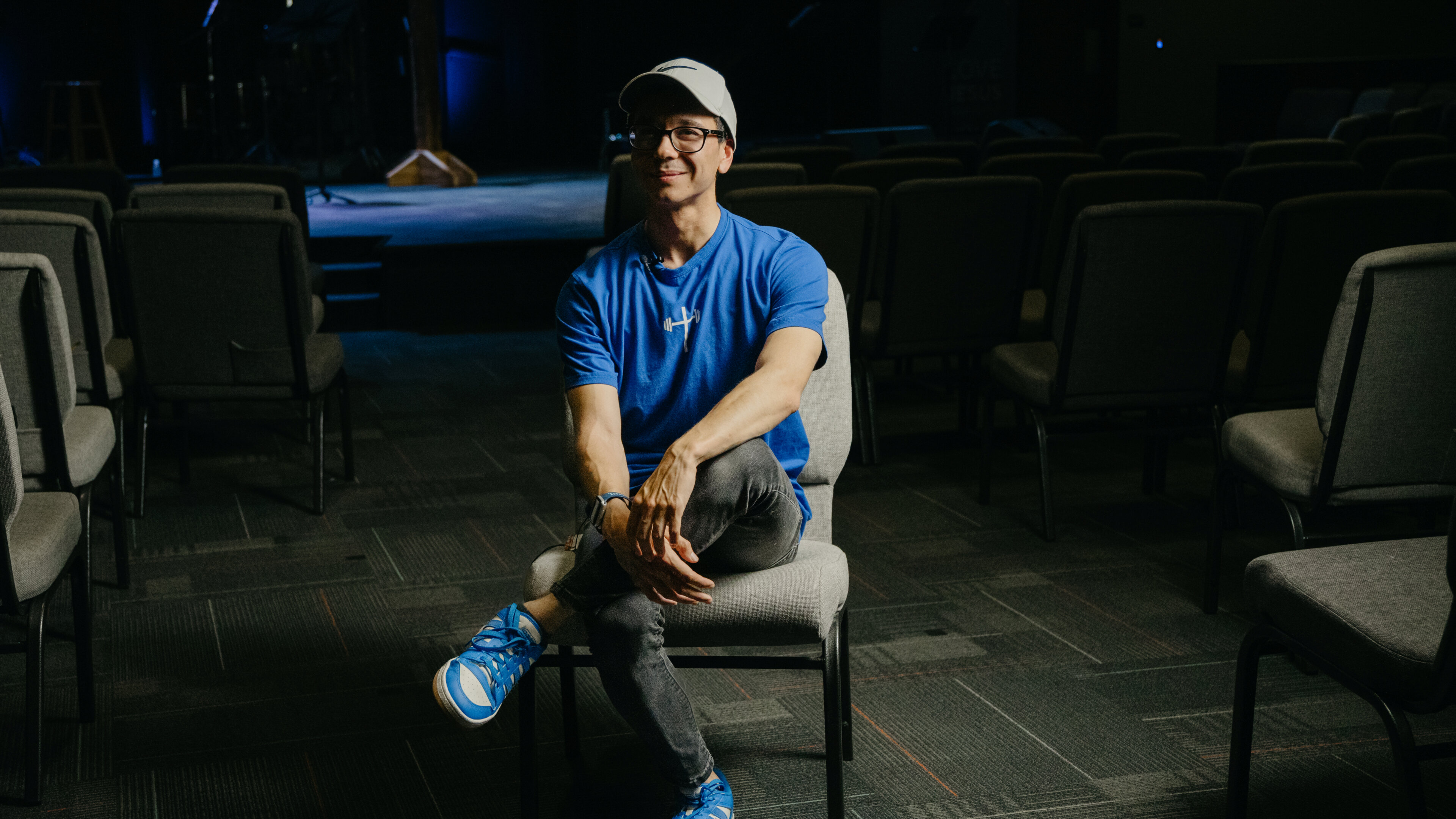
I work as a journalist for FOX 56, play drums for the worship team at multiple Southland Christian Church campuses, spend a lot of time in the fitness community, and look for nearly any opportunity I can find to serve.
Lexington has become home to me, but moving here was never part of the plan I had written for myself.
Looking back, I am grateful my plan did not work out.
Life still has its difficulties, but when I consider the friendships, church community, ministry opportunities, and work God has given me here, I can clearly see that His plan was better than mine.
The Plan I Thought I Wanted
After graduating from Western Kentucky University, I began working for NBC. I started as a field reporter and eventually became a news anchor.
When my three-year employment contract was coming to an end, I began looking for my next opportunity. Bowling Green is only about an hour away from Nashville, and many of my church friends had already moved there.
Nashville seemed perfect.
It was a fun city, the music industry was everywhere, and I already knew people there. I became convinced that Nashville was the next step for me.
I started praying about it, but I was not really praying for God’s will.
I was asking God to send me to Nashville because that was the future I had chosen for myself.
Then the rejection emails started coming.
I applied for several positions and repeatedly received messages explaining that the companies had decided to pursue candidates who more closely aligned with their needs.
The rejection damaged my confidence because, if I am honest, I had developed a large ego. I believed I had worked hard and had something valuable to offer, so I could not understand why no one else seemed to recognize it.
I started beating myself up. I questioned my abilities and wondered why things were not going my way.
I also began asking God why He was no longer on my side.
Then I received a random email.
The Email That Changed Everything
The email came from a news director who said he wanted to start a FOX television station in Lexington. He had seen my work in Bowling Green and wanted to know whether I would help him launch the station.
My first thought was that it was probably a scam.
I searched for FOX 56 and could not find much information, which only made it seem more suspicious. When I questioned him, he offered to meet over Zoom and explain the opportunity.
I discovered that he was legitimate. He had been working in Evansville, Indiana, and genuinely wanted to help establish Lexington’s first FOX station.
The chance to be part of something like that felt like a once-in-a-lifetime opportunity.
Then he asked whether I would consider working for the station full-time. I would not only help launch it; I would become part of the team responsible for building its legacy in Lexington.
Suddenly, I began wondering whether this was the answer I had actually been praying for.
Shortly afterward, I began searching for a home in Lexington and was approved for a house in a great neighborhood. The pieces continued falling into place.
That was when I realized why Nashville had not worked out.
God was leading me somewhere I had not chosen for myself.
Once I arrived in Lexington, I quickly became connected to Southland, Christian Student Fellowship, the fitness community, my coworkers at FOX, and people throughout the city whose stories I was privileged to tell.
Every day, I thank God that I am alive, that I am breathing, and that His plan prevailed over mine.
Knowing About God but Not Knowing Him
I was raised in church, but for much of my life, I would describe myself as a lukewarm Christian.
I prayed before meals, before important tests, and whenever I needed something to go well. I expected God to come through for me during big moments, even though I rarely thought about Him the rest of the time.
I believed God existed, but I did not have a personal relationship with Him.
Part of the problem was that I believed God focused His attention on more important people—pastors, ministry leaders, and people with large platforms.
I was simply a kid who grew up on a farm in Kentucky.
Why would God pay attention to me?
I understood that God had created everything, but I did not really understand Jesus until I was around 16 years old. Even then, I struggled to accept Him as my Savior.
I knew I had sinned, but rather than allowing that knowledge to lead me toward God’s grace, I used it to push myself away from Him.
The more I learned about God’s holiness, the more unworthy I felt.
I thought, “I am so messed up. Why would a holy God want anything to do with me?”
It took one of the darkest experiences of my life to finally understand how deeply God saw and loved me.
Losing My Brother
I grew up with my older brother, Tim.
He taught me nearly everything he knew and was also a drummer on his church’s worship team. He played with so much passion that we joked he may have been the reason drum shields were invented. Before audio technology could control the volume, whatever volume Tim played was simply the volume everyone received.
I looked up to him.
He was a Gulf War veteran and loved his country deeply. But when he returned home from war, he was carrying mental and emotional wounds. He developed destructive habits and made choices that negatively affected our family.
Eventually, our relationship became so damaged that I stopped speaking to him for nearly 10 years.
I told him I did not want anything to do with him anymore. He was no longer the hero I had believed him to be.
Then, in 2017, we learned that Tim had cancer.
At the time, I was living near my family and working as a military reporter at Fort Knox. Knowing that our time together might be limited made me want to repair what had been broken.
Thankfully, his doctors were initially able to help him. Although the cancer had taken a physical toll, he began doing things he loved again.
He played drums.
We went fishing.
For a while, it seemed like everything was going to be okay. I could see God’s grace in the restoration of our relationship.
Then the cancer returned.
Eventually, doctors told us there was nothing more they could do, and Tim entered hospice care.
That was when my already-fragile faith began to collapse.
I could not understand why God would bring my brother and me back together only to take him away.
The Darkest Day of My Life
I was in the room when Tim died. I knew he had passed before my parents did.
It was the darkest day I had ever experienced.
Ironically, the weather was beautiful. The sun was shining, the temperature was warm, and the birds were singing. Anyone driving past our farmhouse would have had no idea that inside, our family was experiencing one of the greatest tragedies of our lives.
I was emotionally destroyed.
Because of our complicated history, I did not know what I was supposed to feel. I felt sadness, anger, regret, and even some relief because he was no longer suffering.
Hospice is an incredibly difficult experience. You want the person you love to remain with you, but you also do not want their suffering to continue.
After Tim’s death, I finally prayed honestly.
I told God, “If You are actually real and You really care about me, send me some kind of sign. I do not care what it is. I will take anything.”
The following day, a military chaplain walked into my workplace.
Angry at a Unicorn
As a government employee working around the military, I had access to the chaplain. He explained that, under the confidentiality granted to his position, anything we discussed would remain between him, me, and God.
At first, I thought his arrival might simply be a coincidence. Still, I decided I had nothing to lose.
I scheduled a meeting and told him my entire story.
Then he surprised me by saying he had known my brother from Tim’s years of military service.
That connection immediately made the situation feel much larger than I had realized.
I told the chaplain I was questioning whether God saw me or cared about anything happening in my life.
He asked me a strange question:
“Josh, have you ever been angry at a unicorn?”
I told him no. I had never even considered being angry at a unicorn.
He responded, “Exactly. You are not angry at a unicorn because you do not believe unicorns exist. Are you angry at God right now?”
I admitted that I was.
He explained that my anger revealed something important: deep down, I believed God existed and had some involvement in what was happening.
That question humbled me.
The chaplain agreed to meet with me each week. Over the following months, he helped me understand Scripture, God’s character, and the true meaning of Jesus’ sacrifice.
Understanding the Cross
For years, I had not understood why Jesus had to die.
If God could do anything, why could He not simply forgive sin? Why was a sacrifice necessary? Why did Jesus have to suffer?
It seemed cruel to me.
The chaplain explained that God is completely holy and separate from sin. Sin carries a real consequence, and atonement requires a sacrifice. The only sacrifice capable of covering the sin of all humanity was the blood of the Son of God.
God sent Jesus to take our sin upon Himself and make a way for us to spend eternity with Him.
As we discussed the crucifixion and I began understanding the suffering Jesus endured, something changed in me.
Jesus had lived a sinless life, yet He willingly allowed Himself to be beaten, mocked, whipped, and nailed to a cross.
He did it while thinking of people like me.
Even as He suffered, He looked at those responsible and asked the Father to forgive them.
This was the Savior I had spent years believing wanted nothing to do with me.
I broke down.
For most of my life, I had believed I was worthless. The cross showed me that, to Jesus, I was literally worth dying for.
I asked the chaplain what I needed to do.
He explained that I needed to confess Jesus as Savior and believe that His death and resurrection were the only way I could be reconciled to God.
Right there, I gave my life to Christ.
From that moment forward, I began learning what it meant to look to Jesus in everything I did.
Becoming Invisible in Worship
Today, one of the primary ways I serve is by playing drums at Southland.
When you find the church that truly feels like home, walking inside can feel like returning home for Thanksgiving dinner. That is what Southland has become for me.
We are a group of imperfect people worshiping a perfect God.
Over time, I have learned that serving on a worship team is not about drawing attention to myself. My goal is to become invisible so people are not focused on the drums or the person playing them.
People sometimes tell me they enjoy my energy or that I am fun to watch, and I appreciate that. But what I really want is for the joy of the Lord to be so evident in me that people begin wondering where it comes from.
I want them to ask, “Why is he so happy? Where does all that energy come from?”
Then I get to tell them it comes from Jesus.
When I consider what He has done in my life and how He has carried me through my past, I cannot sit still.
There is nothing like seeing a congregation worship together—hands lifted, voices raised, and people responding to God through songs rooted in Scripture.
Using Journalism for the Kingdom
My faith also affects the way I work as a journalist.
One thing I love about my job is that the world becomes my office. I get to travel throughout the community, meet people, and tell stories that might otherwise remain unseen.
Many of the stories I cover are human-interest pieces rather than traditional breaking news. That gives me opportunities to tell stories about faith and what God is doing in the community.
I have covered the generosity behind Christian Student Fellowship’s new building and events such as Gather25 at Northeast Christian Church.
In the news industry, division often receives the most attention. Stories that create arguments tend to generate views.
Working in that environment has allowed me to see some of the darkness in the world in ways that others may not encounter every day.
But I also believe I have been given a microphone and a platform that can be used for God’s glory.
That does not mean turning every news story into a sermon. It means working with integrity, treating people well, telling meaningful stories, and refusing to take shortcuts simply because they are easier.
As my faith has matured, the easy way out has become less satisfying.
I want my work to reflect Jesus.
I have also started the Journeys of Josh podcast, where I explore what God is doing in people’s lives. I may host the podcast, but I am not the main character.
Jesus is.
Meeting the Person Sitting Alone
One of the unexpected gifts of working in journalism is how it has made me more curious about people.
People often recognize me while I am working and tell me they have seen me playing drums at Southland. Those interactions remind me that the people in the congregation are not simply faces in a crowd.
They have stories.
Church can sometimes become a place where we arrive, attend a service, and immediately go home. My work has challenged me to slow down and actually meet people.
Now, when I am at church, I try to introduce myself to at least one new person.
I especially notice the person sitting alone.
When appropriate, I walk over, shake their hand, and say, “Hey, I’m Josh. I play drums here. It’s nice to meet you.”
Whether I am at FOX, Southland, or somewhere else in the community, I want people to feel seen and welcomed.
Examining What I Allow Into My Heart
Around the time I turned 30, I noticed significant spiritual growth happening in my life.
Turning 30 is not old, but it is a milestone that naturally makes you evaluate how you are living and what you want to change.
I began looking closely at the media I was consuming.
My Spotify playlists became much shorter because I realized some of the lyrics I regularly heard were not helping me become more like Jesus.
Even when we do not consciously agree with a message, repeated exposure can shape our attitudes. I noticed how often music and media celebrated revenge, resentment, and getting even with people who had hurt us.
Then I compared those messages to Jesus, who loved and forgave the people who nailed Him to a cross.
I began asking myself what I needed to stop listening to, what accounts I needed to unfollow, and what I needed to stop placing before my eyes and ears.
Those changes began affecting the smaller parts of my life.
When I listened to worship music during my commute, I found myself becoming less frustrated in traffic. Instead of focusing on the inconvenience, I remembered that I had a dependable car, a meaningful job, and another day of life.
What we consistently place into our hearts eventually shapes how we respond to the world around us.
When Serving Becomes Too Much
God has also been teaching me about rest.
I love fitness, movement, work, and staying busy. I have always been a “go, go, go” person. Sitting still does not come naturally to me.
That energy can absolutely be used for God’s kingdom.
But so can rest.
God rested on the seventh day of creation—not because He was exhausted, but because He was modeling a rhythm for us.
He calls us to work diligently, but He also calls us to stop and delight in what the work has produced.
For a long time, I ignored that second part.
Christian Student Fellowship was one of the places where God confronted me about it.
I loved serving at CSF. It is an incredible ministry where college students can build friendships, worship together, and grow closer to Jesus. I loved playing there and investing in the students.
But eventually, I began sensing that God might be asking me to step away.
It was not a booming voice telling me to leave immediately. It was a quiet nudge to begin praying specifically about whether my season there was ending.
I did not want to leave, so at first, I prayed for God to show me every possible reason to stay.
Then, after one of my final nights serving there, I felt completely drained.
My work as a journalist already required significant mental and emotional energy. Moving directly from that environment into leading worship meant I was arriving with only part of myself available.
I felt like I was giving God 80 percent.
My heart for serving would not allow me to continue pretending that was enough.
I prayed for God to give me more energy, but instead, I sensed Him saying that the season had accomplished what He intended.
It was time to step down.
Making that decision broke my heart, but it was the right choice.
Since leaving, I have had more energy for my work, my church, and the responsibilities God has clearly placed in front of me.
I had to learn that I cannot serve others well while refusing to care for myself.
You Do Not Have to Be the Hero
Many of us want to be the hero.
We want to work 25 hours a day, eight days a week. We do not want anyone to know we are tired or that we might disappoint them.
But people already know we are human.
We get tired. We have limits. We need rest.
Recognizing those limits is not weakness. Sometimes, it is obedience.
I can look back on my time at CSF and be grateful for what God did through me there. I can also trust that He will continue working in that ministry without me.
If He ever calls me to return, I will respond.
But for now, He has used that experience to teach me that every good opportunity is not necessarily an opportunity I am supposed to carry forever.
Some assignments are only for a season.
What I Would Tell My Younger Self
If I could sit down with the younger version of myself—the Josh who was facing rejection, struggling with his confidence, and trying to force his future into place—I would tell him to stop rushing.
Stop trying to control something you were never capable of controlling.
Trying to take control away from God is like grabbing the steering wheel of a semi-truck when you do not have a commercial driver’s license.
You are not prepared to drive it, and you are likely to wreck yourself trying.
Let God take it.
That does not mean sitting back and doing nothing. God still calls us to work, move, serve, and follow His guidance.
But we do not have to carry the anxiety of controlling the outcome.
There were seasons when my life became extremely dark. In 2019, I reached a point where I was struggling deeply and questioning whether I wanted to keep going.
To that younger version of myself, I would say:
I am glad you are still here.
A lot of people are glad you are here.
God is not finished with you.
Someday, you will be 30 years old and living in Lexington. You will be surrounded by people who love you. You will pour into them, and they will pour into you.
You will have opportunities you could not currently imagine.
Even now, I still have desires and unanswered questions. I am 30, single, and uncertain whether or when that part of my life may change.
But I have to take the same advice I would give my younger self.
Let God take it.
Whatever He chooses to do will be better than anything I could force or create for myself.
His plans already brought me to Lexington.
His grace found me in grief.
His Son showed me that I was worth dying for.
He has been faithful with my story so far.
I can trust Him with everything that has not been written yet.