
Hope Is Here: Greg’s Story of Losing Everything and Finding What Matters Most
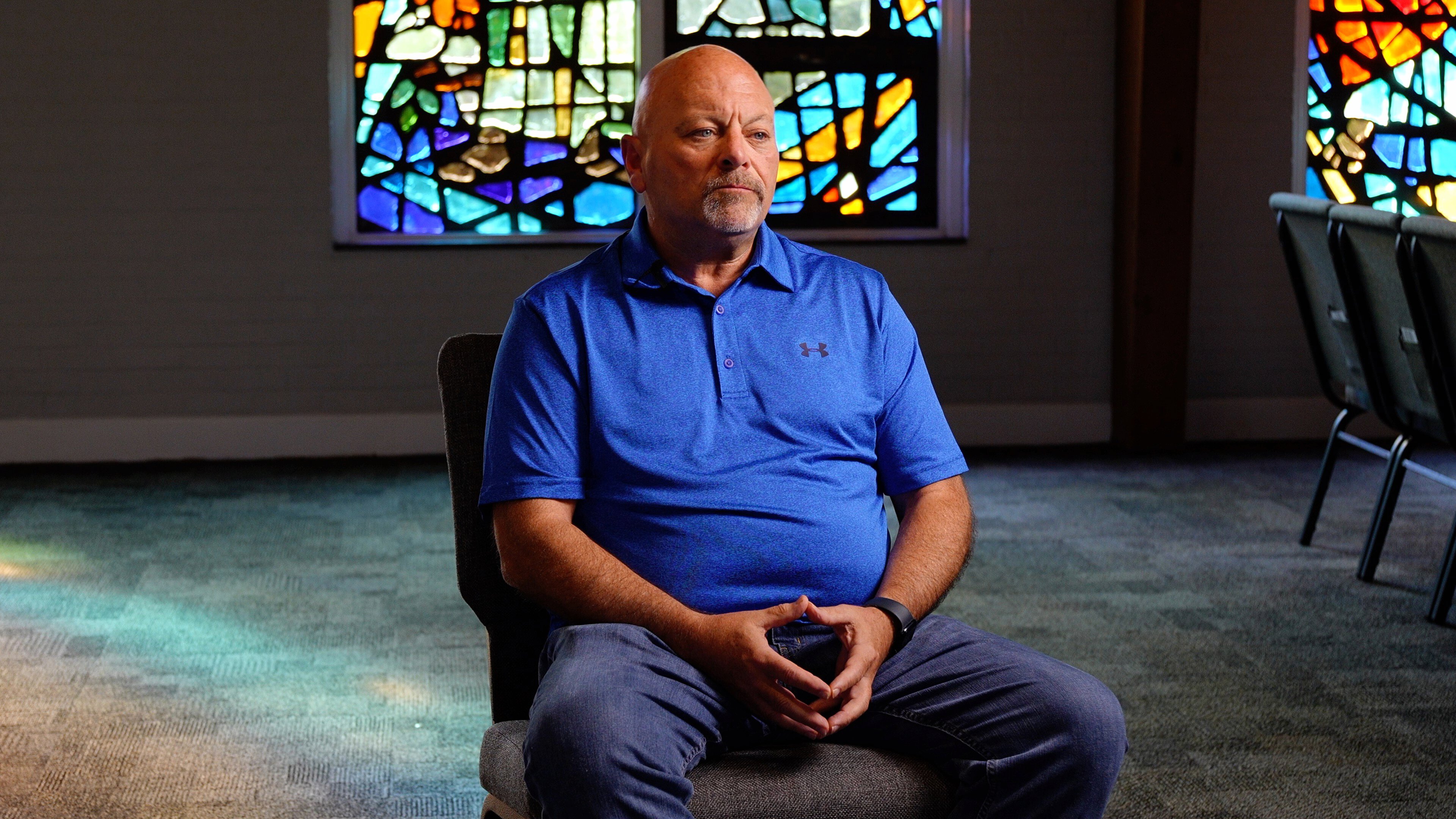
My name is Greg Horn. I am a pastor at Gardenside Christian Church in Lexington, Kentucky, and the executive director of Hope Is Here Ministries.
Hope Is Here began as a daily radio program on WJMM 99.1 FM. Every Monday through Friday, I have 15 minutes to offer people faith, hope, and love. On Wednesdays and Thursdays, I invite guests to share their stories because I firmly believe everyone has one.
The ministry has now produced more than a thousand programs, but it began with a season of devastating loss.
I lost three friends to suicide within approximately 14 months.
Their deaths created what I can only describe as a holy discontent in my heart. I knew the pain of reaching a place where life no longer felt worth living because, years earlier, I had experienced that darkness myself.
Losing Everything in 24 Hours
In my mid-30s, I owned a supermarket in Cynthiana, Kentucky.
The company was producing nearly $10 million in annual sales, and almost 100 people worked with me. I believed I was on my way to becoming a millionaire.
Then it began raining.
It rained and rained until the water became a flood. My supermarket suffered extensive damage.
I carried almost every kind of insurance imaginable—except flood insurance. There had not been a flood in the area for 89 years, so no one believed it was necessary.
Overnight, I went from believing I was about to become a millionaire to being approximately $2 million in debt.
I had to file for bankruptcy. Because I had used my home as collateral for a business loan, I lost that too.
That night, I went home carrying the weight of losing my company and my house.
Then my wife told me she no longer loved me and wanted a divorce.
Within approximately 24 hours, I lost my business, my home, and my marriage.
I began experiencing suicidal thoughts. I reached a point where I did not really care whether I continued living.
Years later, when three of my friends died by suicide, I could not escape the realization that it easily could have been me.
When My Faith Became Real
I was already a Christian when my life fell apart.
I attended church on Sundays. I tithed and believed my salvation was secure.
But if I am honest, the other 167 hours of the week were mostly about Greg.
I had a box for God, but the remaining boxes of my life belonged to me.
People sometimes say that hardship brings us to our knees. When I lost my business, home, and marriage, it felt as though life forced me to put the other knee down too.
At 36 years old, I told God that I was going to find out whether everything I had heard in church was actually true.
I was angry with Him.
The flood happened on my side of the street. There was a Walmart directly across from me with more than a thousand stores, while I only had one.
I asked God why the water had destroyed my business instead of theirs.
But even in my anger, I began consuming Scripture. I read from Genesis to Revelation and allowed the Bible to become more than something I occasionally heard preached on Sundays.
It became personal.
Verses I had heard throughout my life suddenly became anchors. Psalm 28:7 says:
“The Lord is my strength and my shield; my heart trusts in him, and he helps me.”
The collapse of my old life was the worst thing that had ever happened to me, but in some ways, it also became the best.
My faith became real.
I also learned that everything I had worked so hard to accumulate was temporary.
One of my mentors in the faith, Wayne Smith, used to say that he had conducted many funerals but had never seen a U-Haul following the hearse.
We take none of our possessions with us.
Losing everything forced me to reconsider what really mattered.
In the end, it was not the building, money, company, or status.
It was people.
The Missing Key
During the divorce, my wife and I had a safety deposit box at a bank in Cynthiana.
I could not find the key.
At first, I assumed my soon-to-be former wife might have taken it. There was not much inside the box, but after filing for bankruptcy and losing nearly everything, I needed every dollar I could find.
I called the only locksmith in Cynthiana.
While he worked on opening the box, we made small talk. I knew he attended church, so I asked how it was going.
He told me their pastor had recently left to take another position in Western Kentucky.
Without thinking, I said, “If you ever need someone to fill in one Sunday, give me a call.”
As soon as the words left my mouth, I wanted to grab them and put them back.
I was going through a divorce and bankruptcy. Why would a church invite someone whose life appeared to be falling apart to preach?
The locksmith thanked me and mentioned that he had once heard me speak at a Christian business event.
I left embarrassed and hoped the subject would never come up again.
Two weeks later, they called.
Crying Through the Sermon
The church was located in Berry, Kentucky, just outside Cynthiana.
Berry felt like a scene from an old television show: a flashing yellow light, a post office, a bank, a funeral home, and a few churches.
On my first Sunday, approximately 15 people attended.
Then they informed me that I also needed to lead the singing.
I am someone who makes a joyful noise when I sing, but “joyful” is probably the most generous description.
We sang several hymns, and then I preached.
I cried through nearly the entire sermon.
When the service ended, I took my $50 check and assumed it was a one-time experience.
Then they called me again.
I returned and cried through another sermon.
But they continued inviting me.
Eventually, I was no longer crying every Sunday. The church began growing, and I started discovering that God could use me even while I was still healing.
One week, the church was preparing for a “Bring a Friend” Sunday and a potluck. We had recently been averaging close to 50 people.
During my drive to the church, I began calculating how many people might attend if everyone invited someone.
The number 100 came to mind.
I immediately dismissed it. A hundred people seemed unrealistic for our little church.
But I could not escape the thought.
That morning, I shared the vision with the congregation and challenged them to invite people.
Two weeks later, I arrived at the church and saw cars everywhere.
I had forgotten it was the special Sunday.
When I walked inside, the room was standing-room only.
There were 156 people in attendance.
Tears filled my eyes as I remembered the vision God had placed on my heart.
I went into the bathroom to compose myself, and there I sensed God reminding me:
“This is not about you. It is about Me.”
He was showing me that He could use a divorced, bankrupt man who was willing to remain surrendered.
I did not need to have an impressive story or a perfectly organized life.
I needed to keep both knees down and remember who deserved the credit.
The elders of the church later told me they believed God’s hand was on my life and encouraged me to consider full-time ministry.
After praying and seeking counsel from pastors, friends, and family, I was ordained at Berry Christian Church in 2003.
God Is in the Details
I served at Berry Christian Church for two years before joining Northeast Christian Church.
I initially served as an associate pastor and later spent eight years as the executive pastor.
After a challenging season, I stepped away from church ministry for a time and began hosting a daily sports radio program in Lexington.
Sports radio had always interested me, and the opportunity allowed me to explore that passion.
At the time, I did not realize God was preparing me for something else.
Approximately six months after the sports program ended, the radio station’s general manager called me.
He knew my two favorite subjects were Jesus and sports. The station had an available 15-minute lunchtime slot and wondered whether I would be interested in returning to radio.
That opportunity arrived around the same time my third friend died by suicide.
Suddenly, the pieces began coming together.
God had used sports radio to teach me how to communicate consistently on the air. He had used my personal loss to give me compassion for people who felt hopeless. He had allowed me to experience suicidal thoughts so I would understand that kind of darkness from the inside.
Someone needed to begin talking openly about suicide and the loss of hope that often precedes it.
The name God placed on my heart was simple:
Hope Is Here.
The Enemy Comes to Destroy
In John 10:10, Jesus says:
“The thief comes only to steal and kill and destroy.”
Suicide is one of the clearest examples of destruction.
A person may believe ending their life will end their pain and that no one else will care, but the damage spreads through families, friendships, churches, workplaces, and entire communities.
It creates ripples that reach far beyond what the person can see in that moment.
But John 10:10 does not end with destruction.
Jesus continues:
“I have come that they may have life, and have it to the full.”
That became the message I wanted people to hear.
The enemy may be trying to convince you that your story is over, but Jesus offers life.
There is always hope because of Him.
Sometimes the only thing a person needs to do is hold on for another 24 hours.
God can do a great deal in one day.
Everyone Has a Story
One of the greatest privileges of Hope Is Here has been hearing people share what God has done in their lives.
There is a saying that God had one Son without sin, but no son or daughter without sorrow.
On this side of heaven, all of us experience pain, disappointment, grief, or hardship in some form.
But as followers of Jesus, we do not suffer without hope.
One guest named Sherry had escaped an abusive marriage. One day, her ex-husband approached her while she was retrieving her mail, shot her in the head at close range, and then ended his own life.
She was transported by helicopter to the hospital. The surgeon told her children that all they knew to do was pray.
More than 50 people gathered in the waiting room and did exactly that.
Decades later, Sherry is still alive.
She lost certain physical abilities and was unable to continue working at her previous job, but she chose not to become bitter.
She lives with gratitude, mentors others, serves survivors of domestic violence, and has become a powerful prayer warrior.
What someone intended for evil, God has used for good.
Another guest was a college football player who broke his leg during his freshman season.
What began as an injury expected to heal within weeks eventually required several surgeries. Years later, doctors had to amputate his leg below the knee.
He could have walked away from God in bitterness.
Instead, he asked, “God, how can You use this?”
With the help of a prosthetic leg and the continued support of his coaches, he eventually returned kickoffs during his junior and senior seasons.
Stories like these remind me that pain does not have to be wasted.
God can use what we would never choose.
Hope Is Not Overrated
Many things in life are overrated.
Someone recommends a restaurant, and the food is disappointing. Someone tells you a movie is incredible, and you leave wondering whether you watched the same film.
Sports teams can certainly be overrated. I have spent a lifetime suffering as a Dallas Cowboys fan, so I understand that personally.
But hope is not overrated.
The foundational Scripture for Hope Is Here is Romans 15:13:
“May the God of hope fill you with all joy and peace as you trust in him, so that you may overflow with confident hope by the power of the Holy Spirit.”
God is the source of hope.
He offers joy and peace, but the verse also includes a difficult phrase:
“As you trust in Him.”
Trust is often the hardest part.
We have to choose to believe God is working when we cannot see the outcome. We have to trust His character when the circumstances do not make sense.
But the verse promises more than a small amount of hope.
It says we can overflow with confident hope through the power of the Holy Spirit.
Jesus promised that when He left, He would send a counselor and a comforter.
I need both every day.
I need wisdom to know what to do, and I regularly need comfort when life becomes painful.
Through Hope Is Here, I have learned to ask the Holy Spirit where He is working and then join Him there.
Breathing Life Back Into a Church
Several years ago, God brought Hope Is Here and Gardenside Christian Church together.
When I arrived at Gardenside, the church was approximately six months away from closing its doors. It could not afford a full-time pastor.
At the same time, Hope Is Here had become a nonprofit organization and was able to provide part of my support.
I did not necessarily need a full-time position, and the church could not afford one.
The arrangement fit.
As I prepared to begin at Gardenside, I knew I needed a vision for the church.
One morning, my devotional reading included 1 Corinthians 13:13.
At first, I almost skipped it. I had read the verse many times and used it at weddings:
“And now these three remain: faith, hope and love.”
But as I read it again, I sensed the Holy Spirit saying:
“This is how I want you to help rebuild My bride at Gardenside.”
Faith.
Hope.
Love.
We would meet people wherever they were in their faith journey. Some had followed Jesus for more than 50 years but had become discouraged. Others did not even understand the basics of the gospel.
We wanted to help every person take their next step.
We would also help people move from hopelessness to hope through Jesus.
Finally, we would become a place where people knew they were loved.
Loving People in Every Season
A significant portion of the American population is single, divorced, or widowed.
Yet churches sometimes struggle to fully embrace people who are experiencing singleness.
We can unintentionally organize everything around couples and families, leaving people to wonder where they belong.
Jesus was single.
Paul was single.
A person’s marital status does not determine their value or usefulness in God’s kingdom.
Some people may also be married but feel completely alone emotionally. They share a home with someone, yet do not feel known or loved.
Every person needs to know that God loves them.
At Gardenside, our approach has been simple.
Help people grow in faith.
Help hopeless people discover hope.
Show people that they are loved.
We have watched God breathe life back into the church. People who first connected through Hope Is Here began attending. People were baptized, and stories of transformation began emerging.
One of the greatest joys has been watching the faithful group who stayed through the difficult years begin smiling and celebrating again.
They refused to give up on the church.
Now they are seeing new life.
I Feel Like I Am Just Getting Started
As I approached my 60th birthday, I realized something surprising:
I feel like I am just getting started.
God continues opening doors for Hope Is Here in Kentucky and beyond. He continues restoring Gardenside and bringing people into its community.
I do not know everything He has planned next, but I am excited.
Earlier in my life, I often developed my own plans and asked God to bless them.
Now I try to follow a different approach.
Instead of asking God to bless what I have decided to do, I ask Him to show me where He is already working so I can join Him.
I have also learned patience.
I am a Type A person with a strong work ethic. My natural instinct is to move quickly and make things happen.
But when I get ahead of God, things usually do not go well.
So I wait until the Holy Spirit makes the next step clear.
I do not know what is coming, but I believe it will be good.
I genuinely believe the best is yet to come for my one and only life.
What I Would Tell My Younger Self
If I could sit down with the version of myself who had just lost his business, home, and marriage, I would first acknowledge his anger.
I would tell him:
God has not abandoned you.
He is with you in every moment, even when you cannot feel Him.
You cannot see it now, but your pain will create ripples of hope in the lives of people you have not yet met.
When I was younger, I struggled to believe Romans 8:28:
“In all things God works for the good of those who love him, who have been called according to his purpose.”
I believed some things might work together for good.
Maybe even most things.
But certainly not all things.
Now, after everything I have experienced and the hundreds of stories I have heard through Hope Is Here, I believe it.
All things truly can work together for good in the hands of God.
That does not mean every event is good.
Bankruptcy was not good.
Divorce was not good.
Suicidal thoughts and the loss of my friends were not good.
But God has taken the pieces of those painful experiences and used them to bring faith, hope, and love to others.
So I would tell the younger Greg:
Be patient.
Keep looking to God.
Listen for His voice.
Trust Him with all your heart, even when you cannot understand what He is doing.
The darkest day of your life will not be the final chapter.
Hope is here.
And because of Jesus, the best may still be ahead.