
God Still Has a Good Story: James’s Journey Through Calling, Loss, and Hope
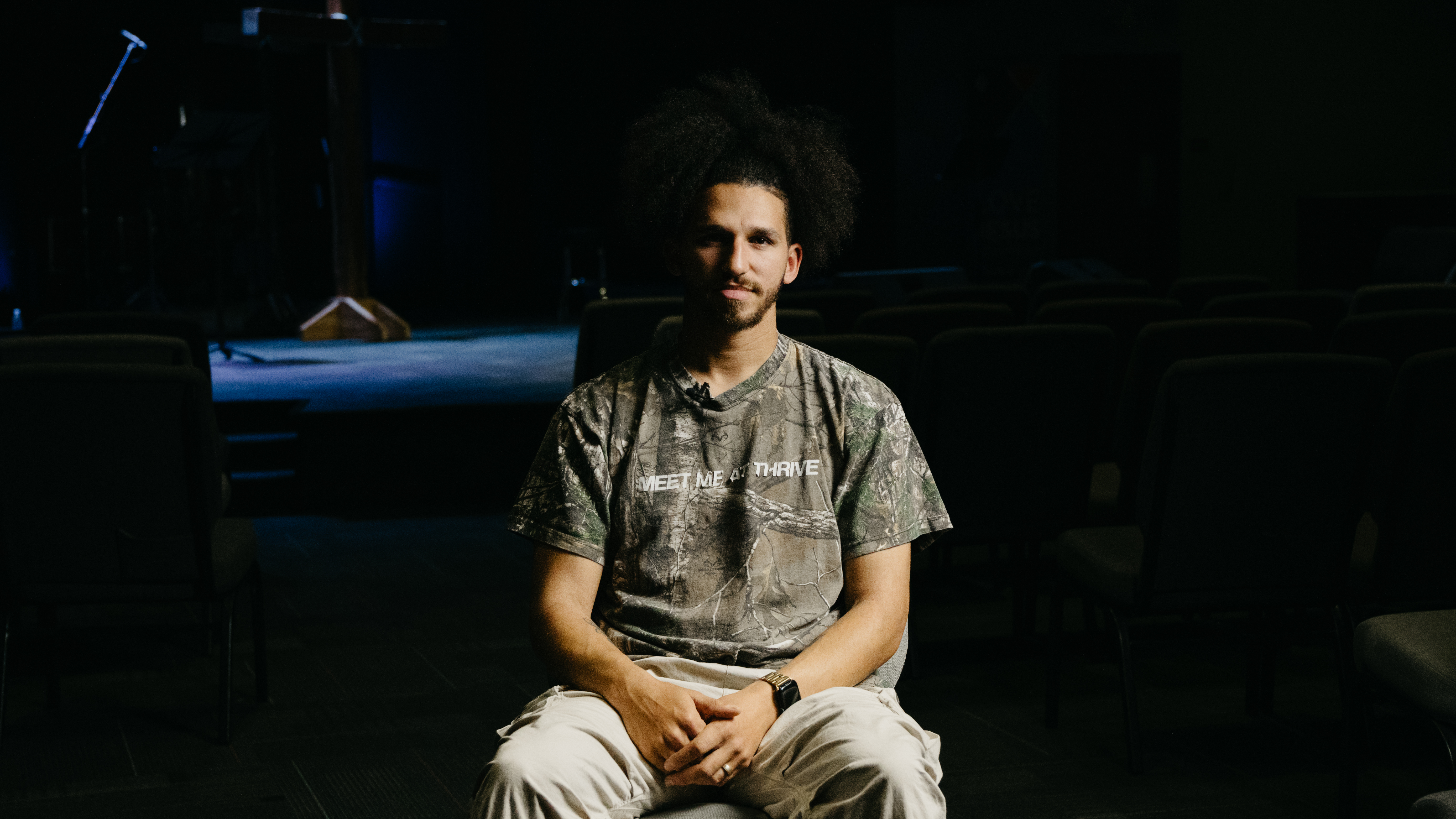
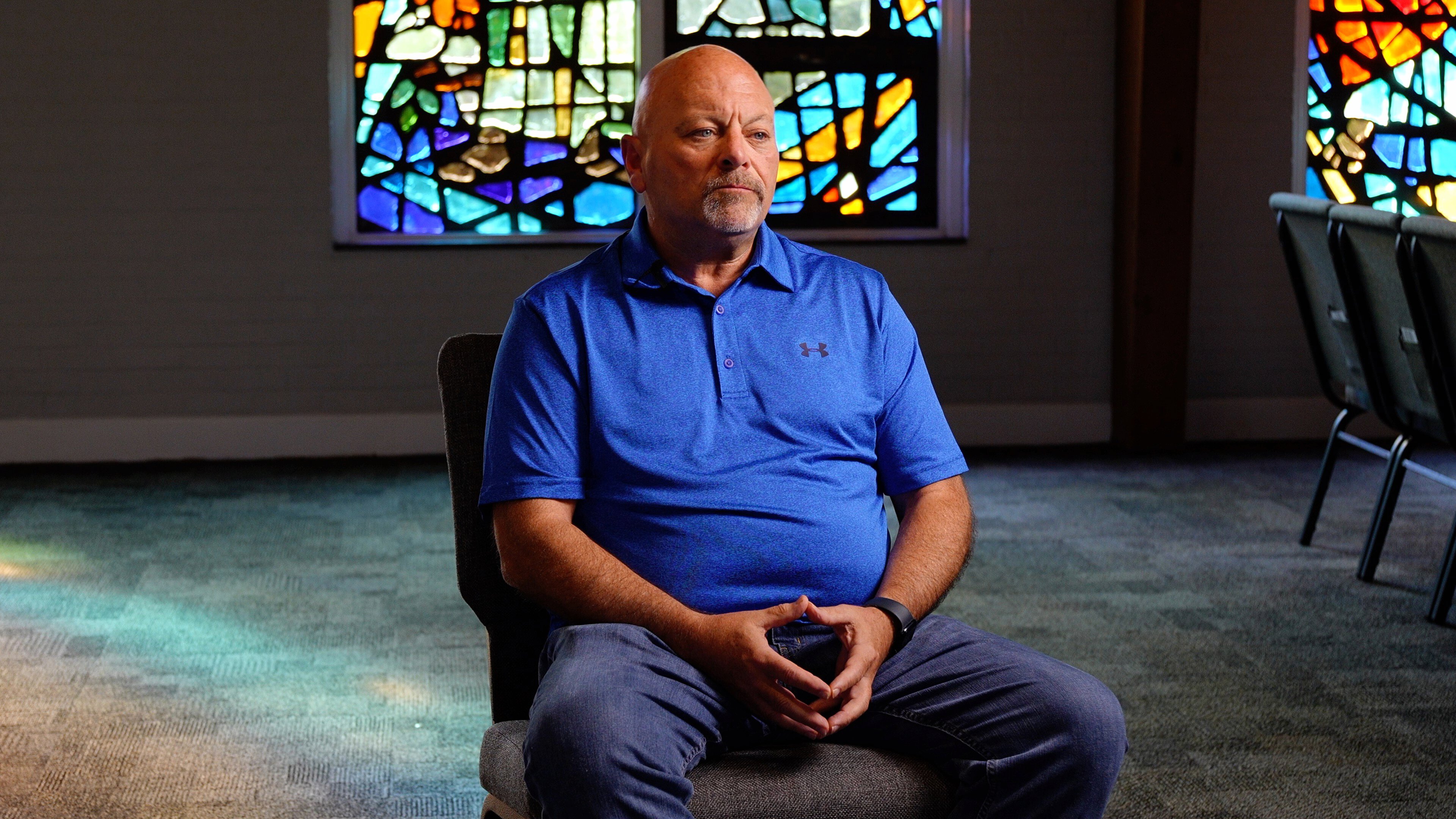
My name is James Reledge, and I live in Central Kentucky. I am an audio engineer on the central production team at Southland Christian Church, where I have served for nearly 27 years.
Today, I oversee audio across Southland’s campuses. I travel from location to location, train volunteers, repair equipment, edit audio, mix weekend services, and help people develop the gifts God has given them.
But I did not begin with decades of experience or an understanding of what God was calling me to do.
I started as a teenager sitting behind an audio console, moving faders without really knowing what they did.
Getting Baited Into Youth Group
I attended Southland occasionally as a child, but I did not become truly involved until my sophomore or junior year of high school.
At the time, I was part of a more alternative crowd. I assumed the students in the youth group were cliquey, and I did not have much interest in joining them.
My youth minister, Brewster, continued inviting me anyway. Between him and my mom, there was always someone encouraging me to give youth group another chance.
Eventually, Brewster found the right way to get my attention.
He told me they needed help with production and asked whether I would be interested.
I had always enjoyed technology. I built computers, played video games, and liked figuring out how things worked. I did not know anything about professional audio, but helping with production sounded interesting.
So, I agreed.
I began sitting in the back of the room and moving faders. I did not understand much of what I was doing, but I could listen and decide whether something sounded good.
That was my starting point.
Eventually, another student named James asked whether I wanted to learn how to mix the church’s broadcast. Back then, we recorded services live to tape using an analog console in the balcony.
It sounded like fun, so I began learning from him.
From that point forward, I spent nearly every free moment I had at church.
I enjoyed the technology, but I also realized it allowed me to serve God while doing something I genuinely loved.
The College Plan That Never Happened
After high school, I enrolled at the University of Kentucky to study computer science through the College of Engineering.
Like many young people interested in computers at the time, I imagined that I might eventually design video games.
The program was excellent, but it was also heavily focused on theory, logic, processors, and the deeper mechanics of computing. I became disillusioned because it did not look like what I had imagined.
Some of my early classes felt easy, so I began skipping them. Then I skipped too often, the material became more difficult, and my grades started falling.
Eventually, the university gave me a choice: improve my grade point average or take a six-month break.
I chose the break, fully intending to return.
Around the same time, a part-time production position became available at Southland. I accepted it in 1998, and by 2000, the position became full-time.
I never returned to school.
My parents did not necessarily love the decision. They had expected me to finish an engineering degree and pursue a more traditional career.
I did not have a detailed plan for the future. I was mostly thinking about the next day and the next opportunity. But when I compared school with what I was experiencing at church, I saw an immediate impact in the work I was doing.
I knew I could be useful there.
Still, as my friends graduated and began their careers, I started questioning myself.
I constantly thought, “You didn’t finish.”
I wondered whether I had made the wrong decision. I watched other people move into the workforce with degrees while I was still living at home and working at a church.
One day, I was sitting upstairs in my family’s computer room, beating myself up over it again.
Then I sensed God say something to me. It was not an audible voice, but it was as clear as anything I had ever experienced:
“You didn’t need that for what I wanted you to do.”
That moment became a turning point.
God was not telling me that education was unimportant or that everyone should leave school. He was reassuring me that my unfinished degree had not disqualified me from the work He had prepared for me.
The path looked different than I expected, but that did not make it a mistake.
Believing the Grass Was Greener
There was another season when I questioned whether I was supposed to remain at Southland.
During the late 2000s, some relationships and personalities at the church made the work difficult. Nothing especially dramatic had happened, but the environment became discouraging.
I am a feeler. When other people are disappointed or frustrated, I tend to absorb their emotions—even when the situation does not directly involve me.
Over time, I became disillusioned.
I had a friend working at a church in Colorado, and I began visiting him. From the outside, that church seemed to be doing everything correctly.
They did not appear to carry the same baggage or limitations I saw in Kentucky. They were doing exciting ministry, and they were surrounded by mountains.
I began talking to people there about the possibility of joining their team.
While driving through Colorado one day, surrounded by the beauty of the Front Range, I sensed the Spirit speaking again.
It was as though God said, “You see what I am doing here? I am going to do that in Kentucky, and I want you to remain part of it.”
Honestly, that was frustrating.
I wanted to stay in Colorado. I loved the scenery and the outdoor lifestyle. But eventually, I had to admit that some of my desire to leave had more to do with escaping discomfort and living somewhere beautiful than following God’s direction.
I returned to Kentucky.
Over time, many of the difficulties that had discouraged me changed. God worked through the problems, removed some of the negativity, and continued doing remarkable things at Southland.
The grass had looked greener somewhere else, but God wanted me to help cultivate what He was doing at home.
Growing From One Campus to Many
When I began working at Southland, there was only one campus.
My responsibilities centered on preparing for the weekend. I set up microphones, patched inputs, learned who would be playing each instrument, attended rehearsals, and tried to create the best mix possible for Sunday.
Technology was much more limited. We could not record rehearsals and refine everything later. We had to listen, make decisions in the moment, and hope we remembered everything when Sunday arrived.
As Southland added campuses, the work began changing.
You cannot clone yourself, so we had to learn how to equip other people.
When the Lexington campus opened in the former Lexington Mall, I moved there months before the first service. Our team installed equipment, hung speakers, ran wires, and built technical systems throughout the facility.
Eventually, Southland developed a central production team that could support all its locations. Today, I oversee the audio side of that work.
My responsibilities include mixing services, training volunteers, editing audio for videos, working on podcasts, repairing systems, and traveling wherever I am needed.
The technology has changed dramatically since I started. Analog consoles and limited outboard equipment have been replaced by powerful digital systems.
But some of my favorite moments have little to do with the equipment.
I love mixing. There is something special about knowing a console so well that you can close your eyes, listen to the music, and respond almost instinctively.
But the most meaningful moments often happen when I am not touching the console.
They happen when I sit beside someone I helped train and watch them create a great mix.
I get to see them use their gifts and participate in what God is doing.
It is not because of me. I may have helped them learn, but God gave them the ability. I simply had the privilege of creating space for that ability to grow.
Sometimes, the best evidence that you have done your job well is realizing that you are no longer needed in the seat.
Growing Up Around Faith
I grew up in a Christian home and do not remember life without some awareness of God and Jesus.
When I was around seven years old and my family was living in Alabama, I prayed and told God I believed in Him.
I was not baptized until my senior year of high school. There was no major reason for the delay. It simply had not happened.
When I wanted to attend a senior trip that required participants to be baptized believers, I finally scheduled a time with Brewster.
He asked what had taken me so long.
I did not have a good answer.
My faith was always present, but that did not mean I never rebelled. I attended a private Christian school in Alabama from second through fifth grade. That environment was so sheltered that I almost forgot other people did not believe the same things I did.
Moving into public school brought some culture shock.
By seventh grade, I had decided I wanted to rebel. I skipped classes and tried to become what I thought was a bad kid. I was never quite as rebellious as I imagined myself to be, but I was moving in the wrong direction.
In eighth grade, I changed schools again and met two important friends, Casey and Kong.
They had experienced similar difficulties and challenged me to believe we were capable of more.
We had been placed in some of the lowest-level classes because of our behavior and performance. Kong looked at us and said, “We’re better than this. We can do this.”
Together, we began making better choices and improving our grades. The three of us remained friends throughout high school.
God used the right people at the right time to redirect me.
Surrendering the Desire for Marriage
As I entered my 30s, I became discouraged about being single.
I had never experienced many serious relationships. Part of that came from not putting myself out there, and part of it came from insecurity and not believing in myself.
Eventually, I confronted God about it.
I told Him that I wanted a wife and wanted to share my life with someone. But I also told Him, “If it is just going to be You and me, I will not pretend I am completely fine with it—but I will be okay.”
It felt like I had finally surrendered the outcome.
Not long afterward, I met Lauren.
She had recently moved from Louisiana to Kentucky after experiencing painful relationships and a previous marriage that had ended in divorce. She was trying to heal and begin again.
Lauren’s sister, Amanda, served on the worship staff at Southland, and Lauren began singing with the worship team.
I was behind the console while she was onstage.
I immediately noticed that she was talented and beautiful, but I did not do anything about it.
Over time, we spent more time together at church. Eventually, Lauren had to be the one to ask me out.
Our first date was December 23, 2008, at a restaurant in Lexington.
I was supposed to arrive at 12:30.
I arrived at 12:45 because, as everyone who knows me will confirm, James is always late.
Lauren and I were complete opposites. She was extroverted, energetic, and often the life of the party. She noticed everyone and made sure they were doing well.
I was the quiet observer.
But we immediately connected.
I walked out of that first date already imagining that we would get married and name our children.
Beginning a Life Together
Our relationship became serious quickly, but not carelessly.
We discussed money, family, children, and the future much earlier than many couples might. Lauren wanted four children—three biological and one adopted. I initially imagined two because that was the family structure I knew.
I knew she had endured significant pain in her past, so when I decided I wanted to marry her, I wanted to approach her father thoughtfully.
He lived in Florida, and I did not want to be a stranger suddenly asking for his daughter’s hand. I visited him, spent time with him, and went fishing with him.
Eventually, while our families were attending a wedding at Disney World, I cornered him and told him I wanted to marry Lauren.
I expected a long list of questions.
Instead, he asked me one:
“Do you love her?”
I said yes.
That was enough for him. He could already see that the love between us was genuine.
I proposed on May 29, 2009.
Because our first date had been on the 23rd, we thought it would be meaningful to marry on another 23rd. We chose October 23, 2009.
We were married at a winery in Lexington, surrounded by friends and family. Afterward, we traveled to Whistler, British Columbia, for our honeymoon.
When we returned, we stepped into married life. We spent time with other couples and began imagining the future we would build together.
We had no idea how little time we would have.
Nineteen Days
Leading up to the wedding, Lauren had experienced some health concerns.
She had swelling in her legs and several other symptoms, but we did not understand what was happening. The H1N1 flu was circulating at the time, so there was confusion over whether her symptoms were connected to that or something else.
I remember mentioning the possibility of a blood clot, but we continued moving forward with life.
On November 11, 2009, only a few weeks after our wedding, Lauren woke up to prepare for work.
I heard her collapse in the bathroom.
She had fallen, hit her mouth, and lost consciousness. There was blood, and neither of us understood what was happening.
She regained consciousness and told me to call 911.
While I spoke with the dispatcher, she repeatedly passed out and woke back up. In typical Lauren fashion, she kept telling me to ask the paramedics to hurry.
When the first responders arrived, one of them sent me outside to direct the additional emergency vehicles.
I ran outside in whatever I had been sleeping in, functioning entirely on adrenaline and following every instruction I was given.
Before the ambulance left, someone told me that Lauren was no longer breathing.
I shifted into problem-solving mode.
I contacted her sister, gathered Lauren’s things, got into my car, and followed the ambulance to the emergency room.
During the drive, I prayed.
I told God, “I trust You with her. If it is Your will, completely heal her from whatever this is. But if it is not, I still trust You.”
At the hospital, I was taken into a private room and told it was simply so I would not have to wait in the lobby.
Lauren’s sister arrived, and we waited together.
Eventually, an emergency room doctor we recognized from Southland entered the room. He asked me to explain everything that had happened.
I assumed that meant Lauren had been stabilized and he needed information to determine the next step.
I entered a kind of robotic state, listing every detail I could remember.
When I finished, he told us that the medical team had worked on Lauren for an hour but had been unable to restart her heart.
She had died.
Nineteen days after our wedding, my wife was gone.
When Life Became a Blur
The following days and weeks barely felt real.
The same pastors who had performed our wedding performed Lauren’s funeral. They told me they had never experienced anything like it.
Friends, family members, church staff, and coworkers surrounded us. We were able to say goodbye to her in the hospital, but I struggled to comprehend what had happened.
One of the hardest parts was realizing that all the private conversations Lauren and I had shared were now mine alone.
We had discussed our hopes, our fears, our plans, our future, and the family we wanted to build.
No one else knew all of those things.
That shared world had disappeared overnight.
A medical examination revealed that Lauren had multiple blood clots. Even if we had understood what was happening earlier, there may not have been anything that could have saved her.
But grief does not always listen to reason.
I blamed myself.
I wondered whether I should have recognized the signs or pushed harder for medical answers. I thought we should have changed our health together or done something differently.
I felt guilty when I thought about her father. The last time he had seen her was at our wedding, when he had entrusted her to me.
Now she was gone.
The enemy used that thought to whisper that it was my fault.
Her father did not blame me. No one did.
But grief has a way of making you carry responsibility for things you never controlled.
The Ministry of Sitting Beside Someone
During those first few weeks, I stayed with my parents.
A friend named Jeff came to the house and sat with me.
We did not have a deep conversation. Most of the time, neither of us spoke.
He was simply there.
His presence meant more than he probably realized.
That experience changed the way I think about helping someone through grief. When someone loses a spouse, parent, child, or another person they deeply love, we often feel pressure to say something meaningful.
But there may not be anything to say.
You do not need to explain the loss.
You do not need to solve the pain.
Sometimes, one of the greatest gifts you can offer is to sit beside someone so they do not have to experience the pain alone.
Smiling Again
For several months, I was simply getting through life.
Then, slowly, I noticed that I could smile again.
I began feeling excited about small things. The pain did not disappear, but it stopped occupying every moment.
We held another funeral in Louisiana for the family members who had been unable to travel to Kentucky. We sat together, shared memories, and remembered who Lauren had been.
Those moments were painful, but they were also healing.
Over the years, Lauren’s family and I have grieved at different speeds and in different ways. Her mother and I still acknowledge important dates. On Lauren’s birthday, I may send her a heart. On our anniversary, she may send one to me.
The pain is no longer as raw as it was, but it remains part of us.
Losing someone can feel like losing part of your body. Life continues, but there is a kind of phantom pain that never completely disappears.
This Was Not the End of the Story
Around six months after Lauren died, I sensed God showing me something.
It was as though He said, “You are hurting, and it is okay to hurt. But this was not only about you. You were able to partner with Me in restoring her.”
Lauren had come to Kentucky after experiencing significant pain. During our short time together, she found love, safety, healing, and a fresh beginning.
Now she was with God.
I would continue grieving, but I also began recognizing the gift I had been given.
I got to love an extraordinary person.
Our marriage was unimaginably short, but that did not make it meaningless.
Our story would always be part of me, and I could continue sharing it.
I could have spent the rest of my life angry with God. Instead, He helped me see that Lauren’s death was not the end of her story—or mine.
There was still hope.
There was still life to be lived.
Lauren would have wanted me to continue. Honestly, she probably would have kicked my butt if I had given up on everything God was still asking me to do.
Continuing to Be Used
I have not remarried. I have remained open to another relationship, but no situation has felt right.
It would take someone special.
In the meantime, I continue focusing on the life God has placed in front of me.
I serve my family as my parents grow older. I remain connected to my brother. I continue working in a ministry that challenges and fulfills me.
Nothing about my ability to be used by God ended when I lost Lauren.
I had an incredible, incredibly brief season with someone special. That season became part of my story, but it was not the final chapter.
My work at Southland continues changing. There are always new technologies, new buildings, new volunteers, and new problems to solve.
I am also surrounded by people who have served faithfully for many years. That kind of longevity is special.
Staying in one place is not the right path for everyone. Sometimes God calls people into something new.
But for me, He repeatedly reminded me to remain.
I am grateful I listened.
What I Would Tell My Younger Self
If I could speak to the teenager who first sat behind an audio console, uncertain about his future, I would tell him to trust God.
If I could sit beside the version of myself who had just lost his wife, I would tell him the same thing—although I know those words would have been much harder to receive.
I would tell him:
There is still hope.
There is still life ahead of you.
God still has good for you.
Trusting God does not mean pretending the loss is not devastating. It does not mean forcing yourself to smile or rushing through grief.
It means believing that pain does not get to write the final sentence.
To the younger version of myself who felt like a failure because he did not finish college, I would say:
God has a good story for you to write.
You and He get to participate in writing that story together.
I could have finished my computer science degree, entered the technology industry, and lived a good life. I might still have influenced people and shared my faith.
But when I look at the path God gave me—the people I have trained, the services I have helped create, the volunteers I have encouraged, the church I have watched grow, and the story I now carry—I believe this became the better story for me.
It was not the easier story.
It included disappointment, uncertainty, grief, and a loss I would never have chosen.
But it also included calling, love, community, purpose, and hope.
Your story may not unfold the way you planned.
You may leave something unfinished.
You may be asked to remain when you want to leave.
You may lose someone you cannot imagine living without.
But your most painful chapter does not have to become your final chapter.
There is still hope.
There is still life to be lived.
And God still has a good story for you.